Sunday was the last Breakfast Club for 2023. As usual, there was a great turnout of both classic cars and spectators.
As usual, I’m posting a few photos from my visit.
First up then is this Gordon-Keeble. A British car marque with a local base, The original concept was conceived in Slough, and construction was in Eastleigh, near Southampton. Build took place between 1964 and 1967.

Oddly, the cars badge features a tortoise. The story goes that a pet tortoise walked into frame at a photo shoot and was chosen as the emblem.
And now for something completely different. Here, we have a Daimler Scout Car, known in service as the Daimler Dingo. It is a British light (3 tonnes), fast four-wheel drive reconnaissance vehicle.

Powered by a 2.5 litre 6 cylinder engine with 5 forward and 5 reverse gears, it was capable of speeds up to 55 mph. Although, speaking to the owner, this would be a noisy experience for the driver and scary, too, as stopping could be an issue. This vehicle only has drum brakes !!
No, this next one isn’t an aircraft carrier. Although it seems big enough. All I know is that it is a Ford

Oh, and 302 CI (cubic inches) equates to around 5 litres.
Next up is a rare beast. It’s a Rover P6 3500 Estoura. It was never a production car with only around 160 conversions having been completed.
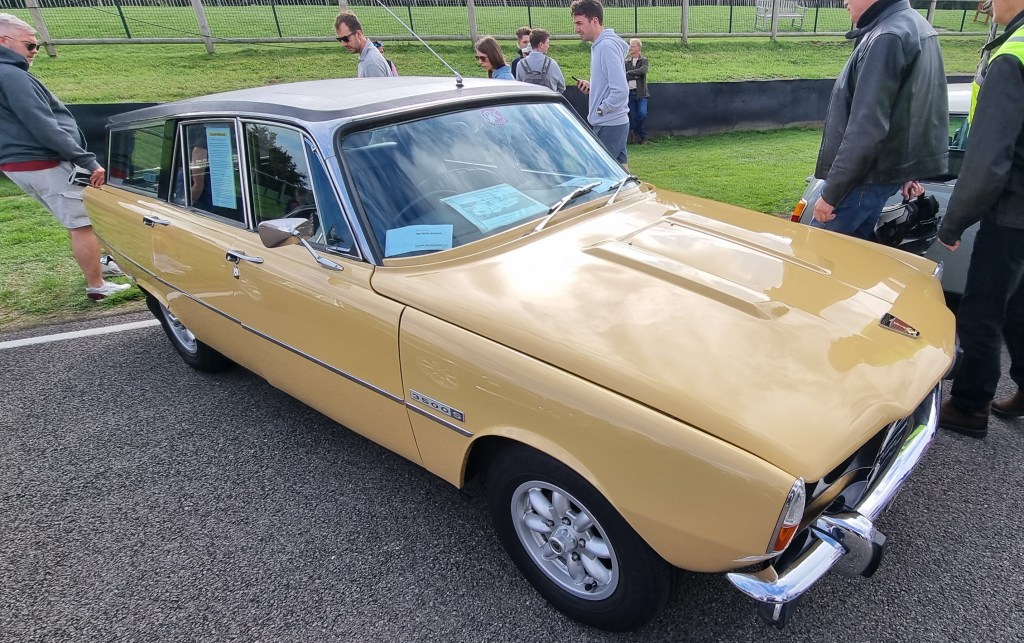
Bought new in 1973 for around £2000 the conversion cost was just under £700.
I don’t really know much about this next car. I had to Google it, and this is what I believe it to be.
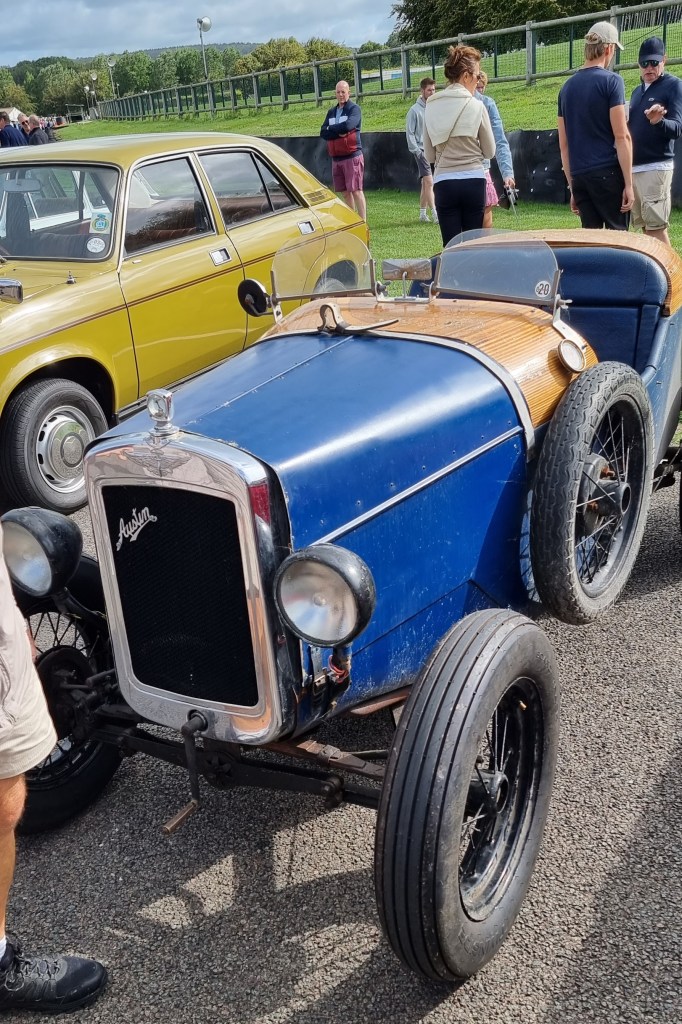
An Austin Seven Mulliners Style Boat tail c1938. Providing a truly minimalist driving experience.
The Citroën 2CV, in French deux chevaux i.e. “two horses.” It was designed with the french farmer in mind to replace the ubiquitous horse and cart. It was literally designed to cross a freshly ploughed field with a basket full of eggs on the passenger’s seat without breaking them. Due, at that time, to a lack of paved roads in France. The 2CV was produced from 1948 to 1990.

A bit of a wolf in sheep’s clothing. The Triumph Vitesse looked just like it’s cousin, the Triumph Herald. But under the bonnet, the Vitesse had a straight 6 with twin carburettors.

Available in either a 1600cc or 2000cc version. I was lucky enough to own a 1600 version for a couple of years until the differential failed. Sadly, at the time, I couldn’t afford to pay for it to be repaired, and with no willing buyers, I had to scrap the car.
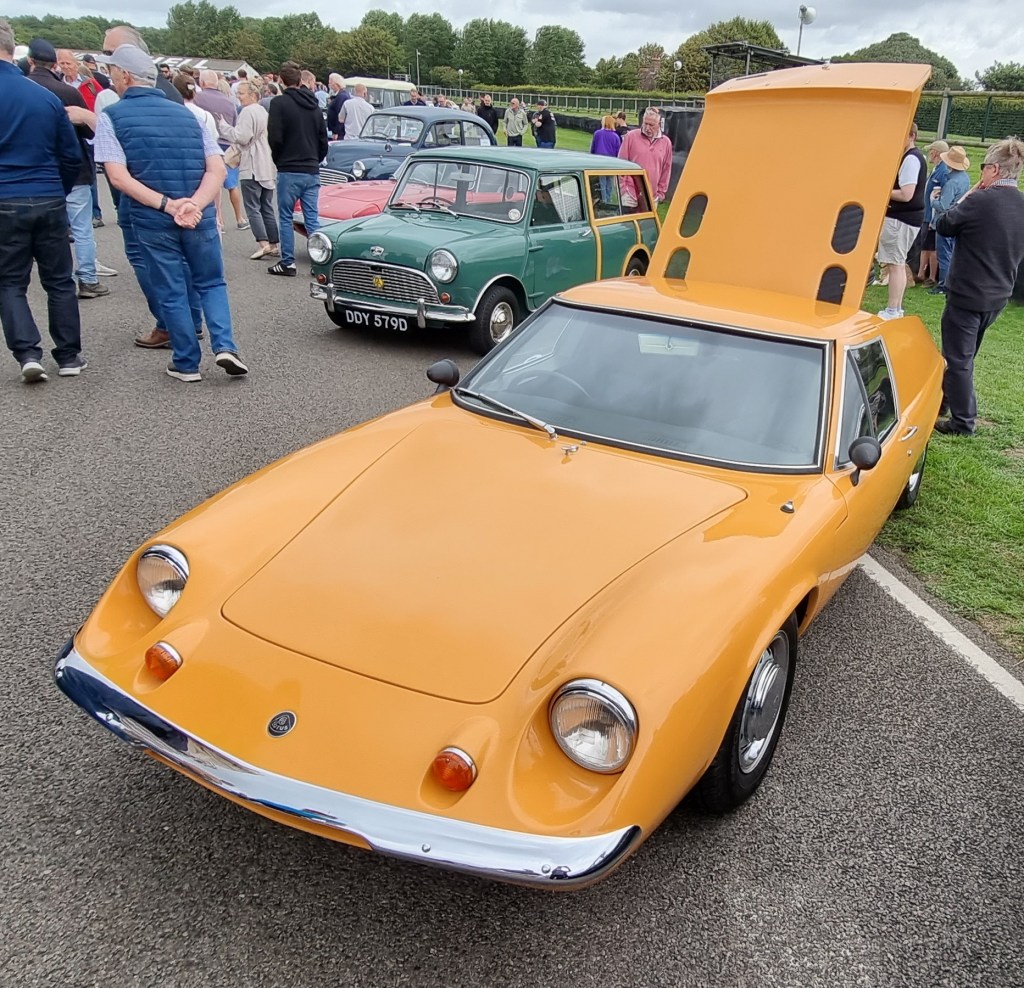
One of the prettiest sports cars ever produced was the mid-engined Lotus Europa. Produced from the mid 60’s until the mid 70’s, nearly 10,000 cars were produced.
Just look at the beautiful flowing lines of this next example, a classic Jaguar XK120, presented here in racing trim.

Potentially worth in excess of £300,000
Back across the channel to France for another beautiful car. The Citroen Traction Avant.

The Avant was one of the first production cars to incorporate front-wheel drive, a monocoque body construction, and all-round independent suspension.
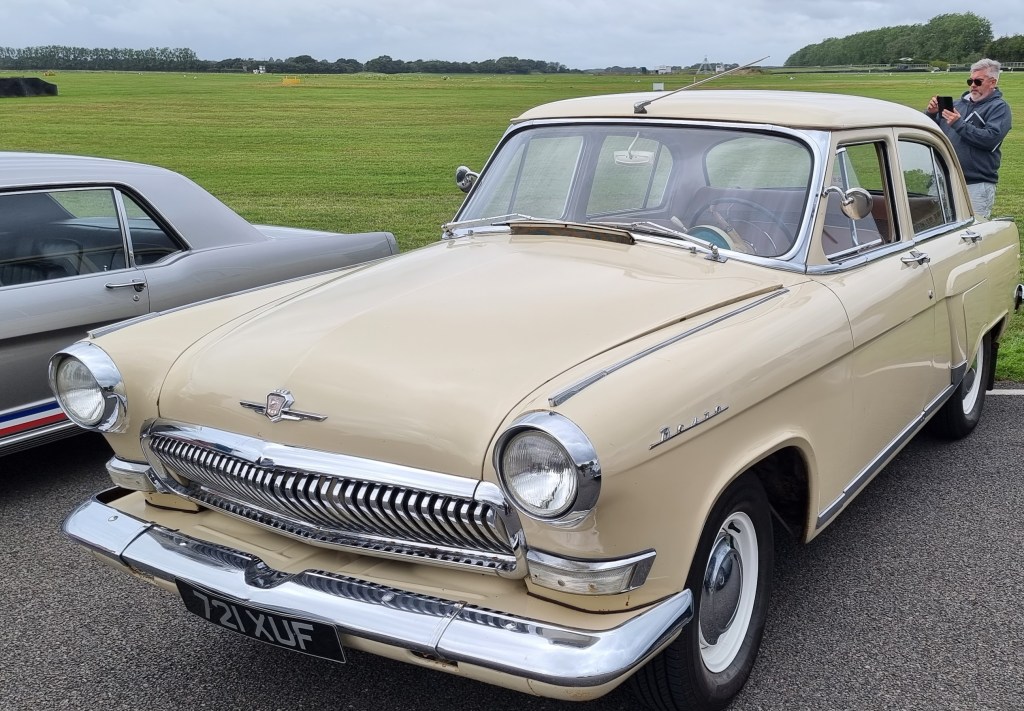
Here, putting in a rare appearance is Russian GAZ M21 Volga saloon. Produced between 1956 thru 1970
And that is it from the Goodwood Breakfast Clubs for this year. Of course, there were many more vehicles on show. I have barely scratched the surface.
The Breakfast Club events are always good value for money as they are free. Even the car parks are worth strolling around as many more classics are there to be seen








 WrAnTz