Limousin, France – Day 7


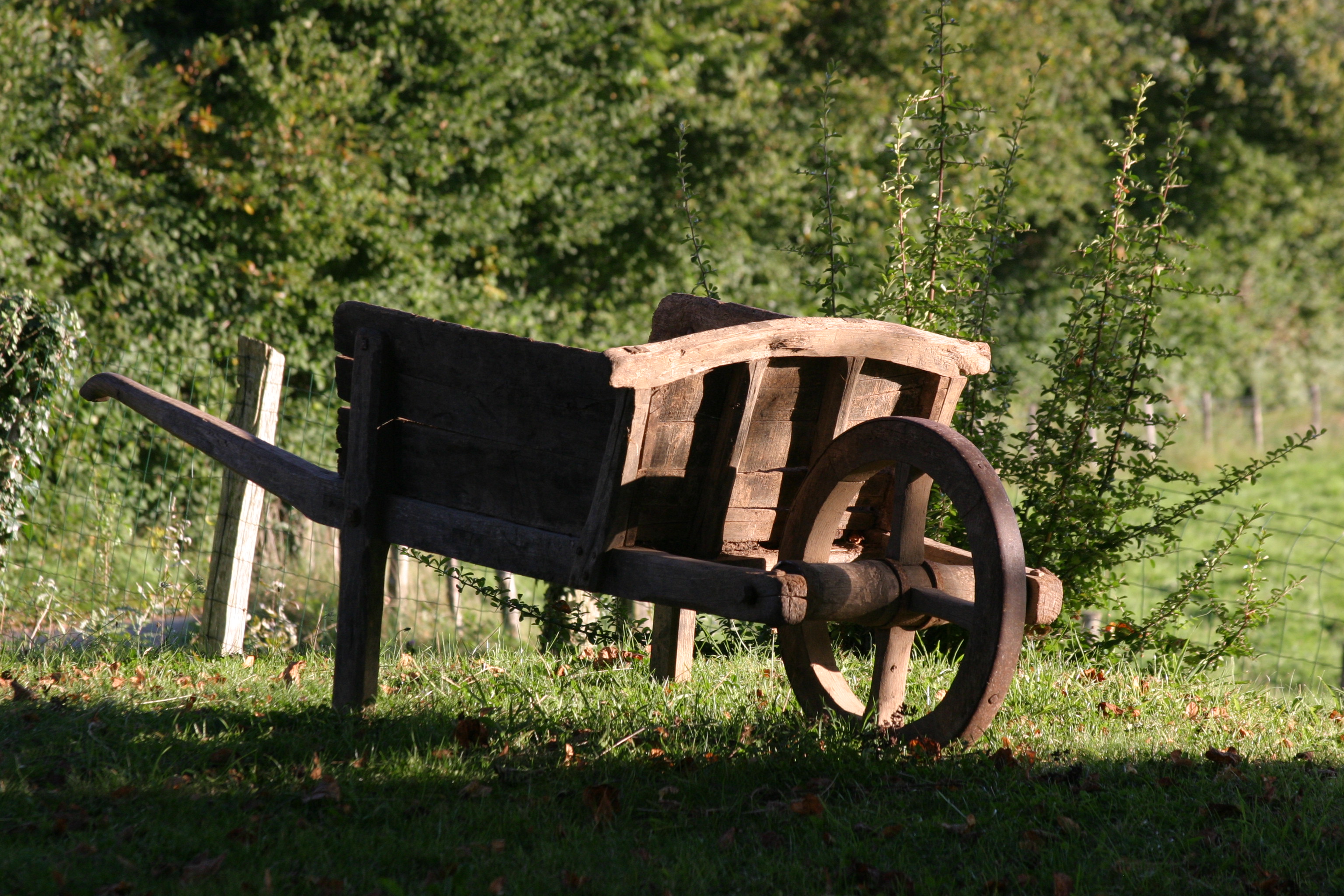
Yet another misty morning and we were treated to a visit from a Red Squirrel. We had been throwing out the stale bread for the birds, using the wooden barrow as an impromptu bird table. Tufty seemed to like stale bread too. He certainly had the teeth for it which is more than could be said for us old codgers in the gite.
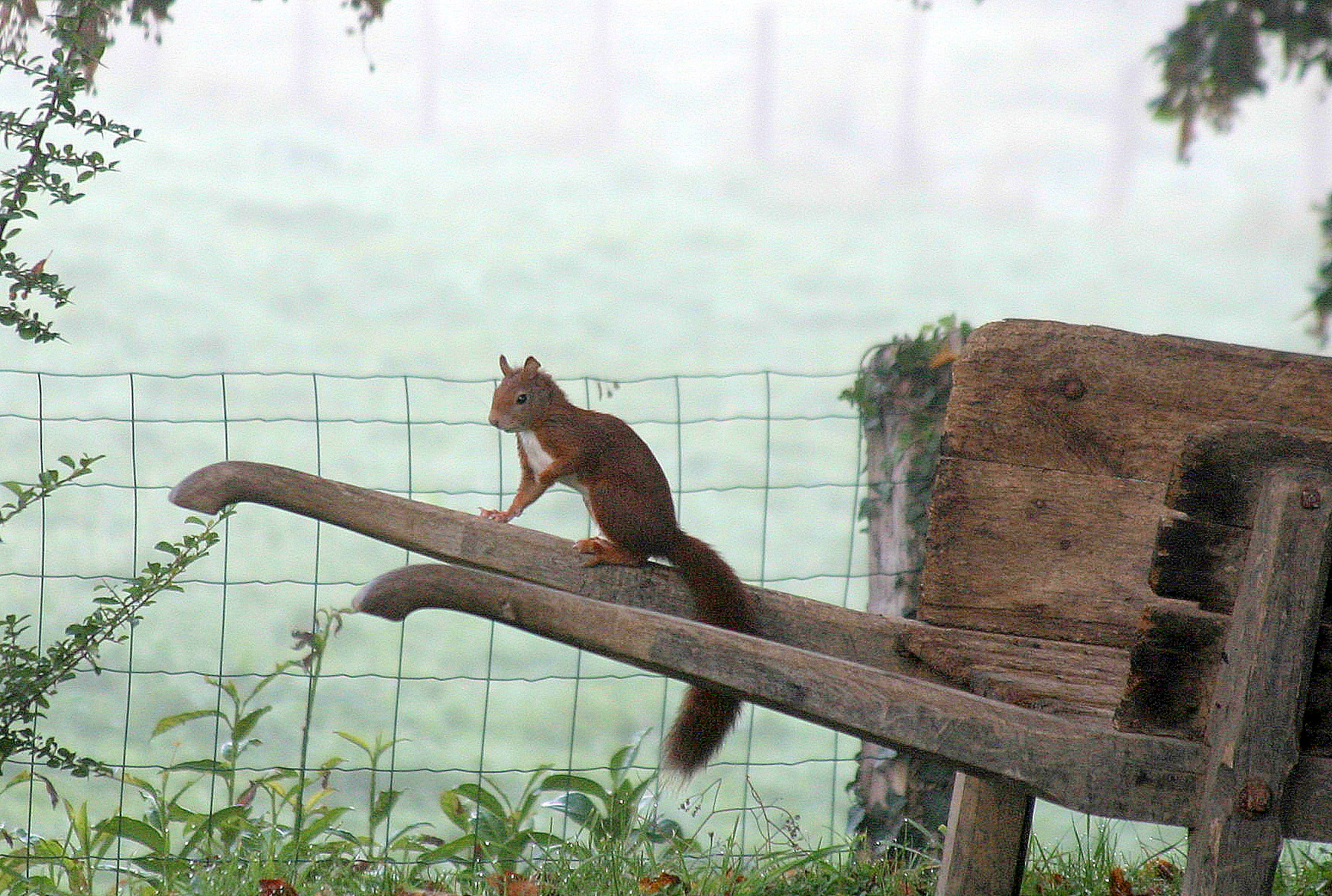
 

Red Squirrel - La Porcherie, Limousin, France
Red Squirrel – La Porcherie, Limousin, France

Our itinerary for today, Thursday, was to take us to Oradour-sur-Glane a few miles north and west of Limoges.  Chosen by me because, a couple of years ago, I had read an excerpt from a book that had just been published. The excerpt, published in one of our national papers, told of the tragedy that befell the residents of this French village.

So to set the scene …

On 10th June, 1944, 642 of its inhabitants, almost the entire population of Oradour, including women and children, were massacred.

From Wikipedia: A massacre is a specific incident which involves the violent killing of many people and the perpetrating party is perceived as in total control of force while the victimized party is perceived as helpless or innocent.

Although the true reason for this atrocity is not known, one explanation is that  members of an SS Panzer Division entered the village to avenge a German officer, kidnapped by the French Resistance.

The SS ordered all the townspeople to assemble in the village square. To keep everyone calm, this was done under the pretense of having  their papers checked. Some 400 women and children, separated from the men, were herded into  the church where the SS placed an incendiary device.  After it was ignited, women and children tried to escape through the doors and windows of the church, but they were met with machine-gun fire. Only one woman, 47-year-old Marguerite Rouffanche, managed to escape from the church. She was shot and wounded as she escaped but managed to hide until she was rescued the next day.

The men of the village, more than 200 were herded into a barn where machine gunners opened fire, shooting at their legs so they could not move then dousing them with petrol and setting them alight. The SS then looted the village and set fire to the buildings before leaving.

A few months later, after Liberation, de Gaulle visited Oradour-sur-Glane and it was decided that the ruins were to remain, untouched, as a monument to the martyr village.

Oradour-sur-Glane now has a visitor centre, the “Village Martyr, Centre de la Memoire” which leads you through world history and the events that lead to the war and ultimately to the events that occurred in Oradour itself.
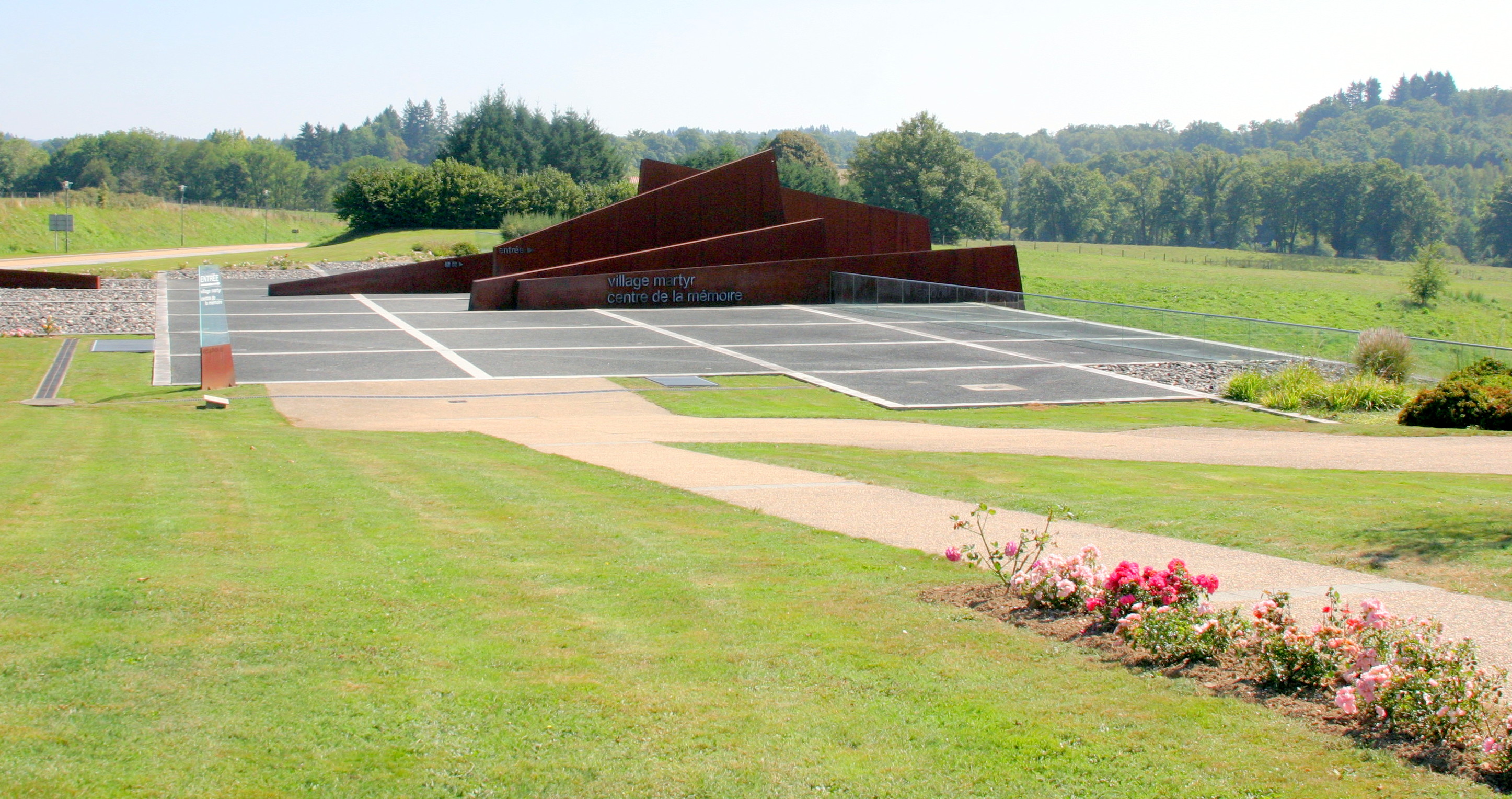
Centre de la Memoire, Oradour-sur-Glane, Limousin, France

The centre sets out to put Oradour into its proper context in the war. The village was quite prosperous and, with several cafe’s and restaurants, was a popular destination for people from Limoges and the surrounding areas. All this came to a dramatic end on that fateful day.

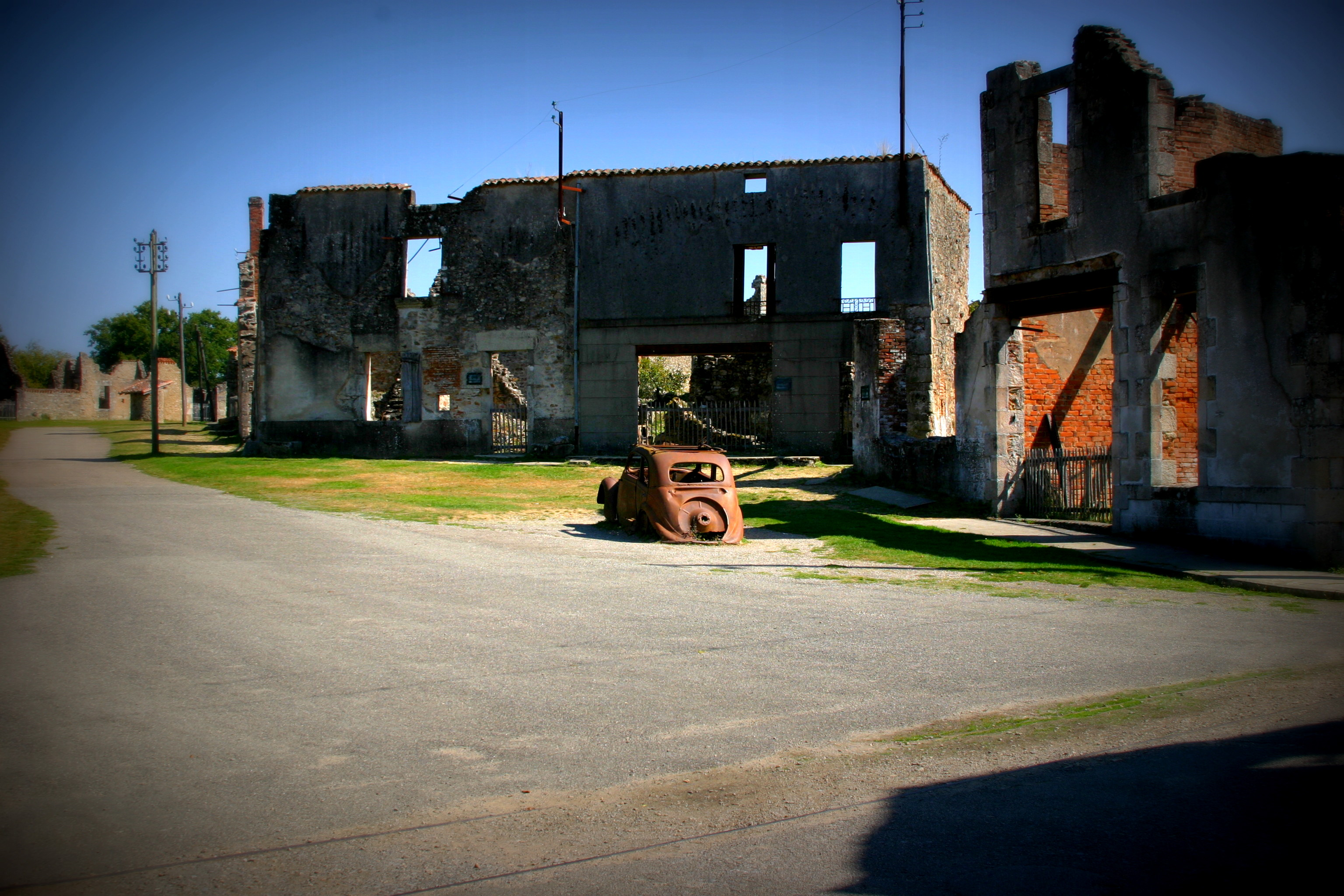
This then, is the Oradour-sur-Glane left behind by the SS on that summer’s day.
or1
Oradour-sur-Glane, Limousin, France

As you walk through the village you become increasingly aware of how quiet it is. It isn’t just that you are requested, on entry, to remain quiet. Having been through the visitor centre you are well aware of the tragedy that occurred here and the enormity of the crime seems to be underlined.
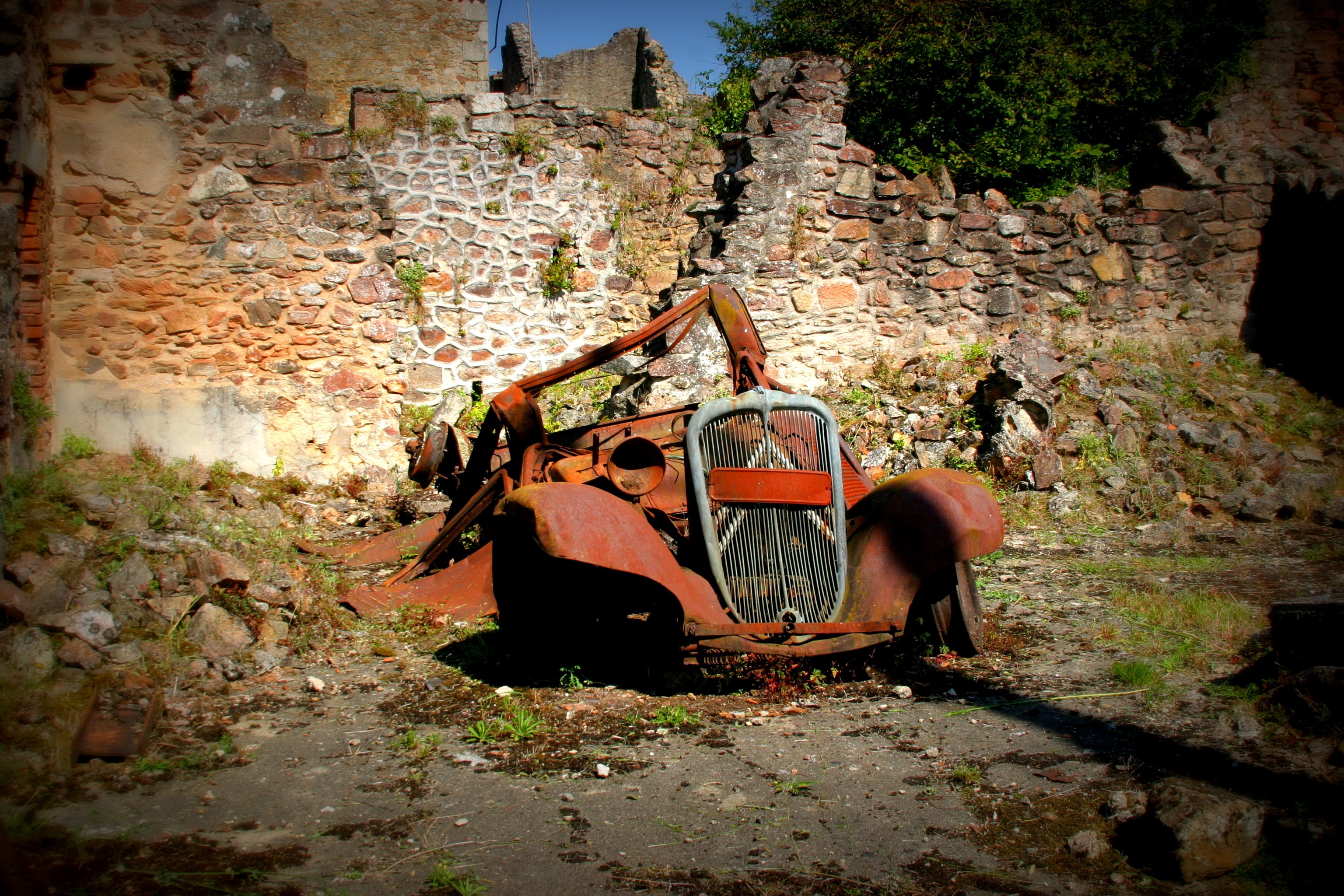
Oradour-sur-Glane, Limousin, France

Deserted streets which were once busy with the footsteps of the local residents.  No more greetings as friends and neighbours meet, going about their daily business. Visiting the boucherie, charcuterie, boulangerie or even ladies chatting about their appointment at the salon de coiffure. Silent.

Oradour-sur-Glane, Limousin, France

The tram lines and wires which once carried many visitors now lead nowhere and, like the streets, are silent. The quiet settles about you like a mantle. It’s not oppressive here although you might expect it to be.
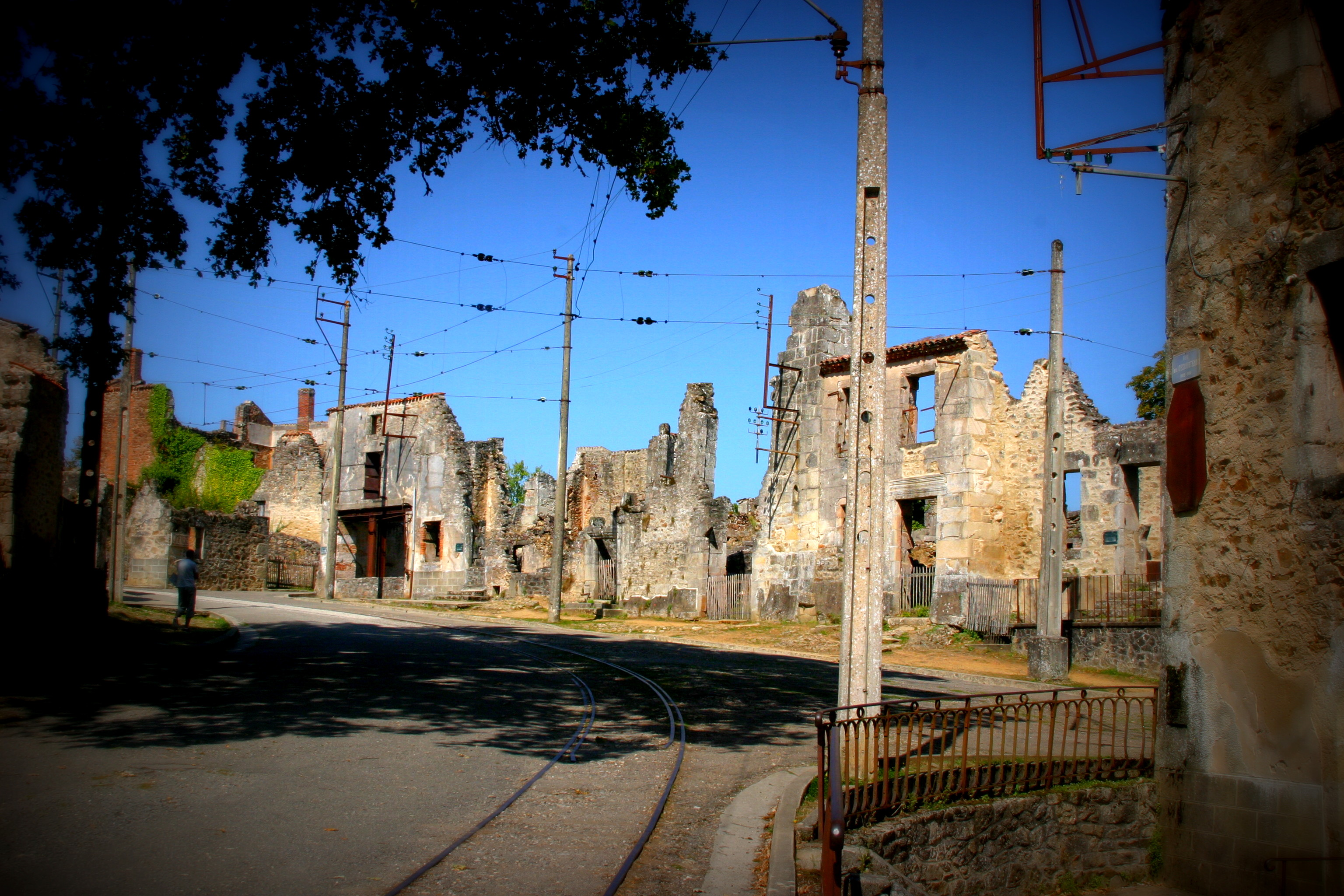
Oradour-sur-Glane, Limousin, France

The plaque on the wall of the ruined church reminds us that some women and children were massacred by the Nazis and asks that you make a prayer  for the victims and their families.
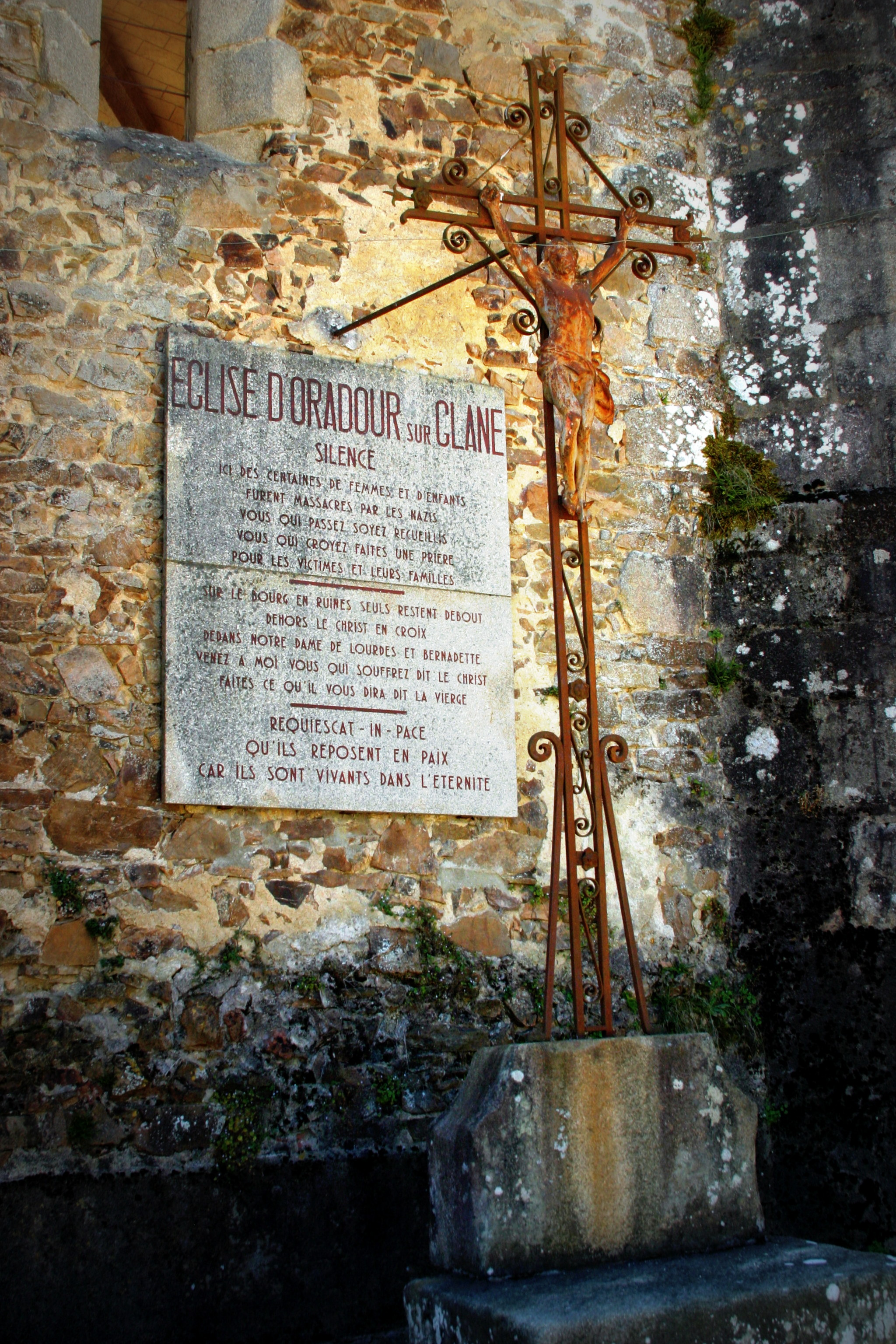
Plaque on the church - Oradour-sur-Glane, Limousin, France
Plaque on the church – Oradour-sur-Glane, Limousin, France

The heat of the fire was so intense that the bell dropped from the church tower. Just a molten blob remains, with only the clapper giving a clue as to its original purpose.

Molten remains of the church bell - Oradour-sur-Glane, Limousin, France
Molten remains of the church bell – Oradour-sur-Glane, Limousin, France

Another symbol of the heart that was ripped out of Oradour is the infants school. This being a weekday, there should have been the sounds of the classroom and the playground. Silent
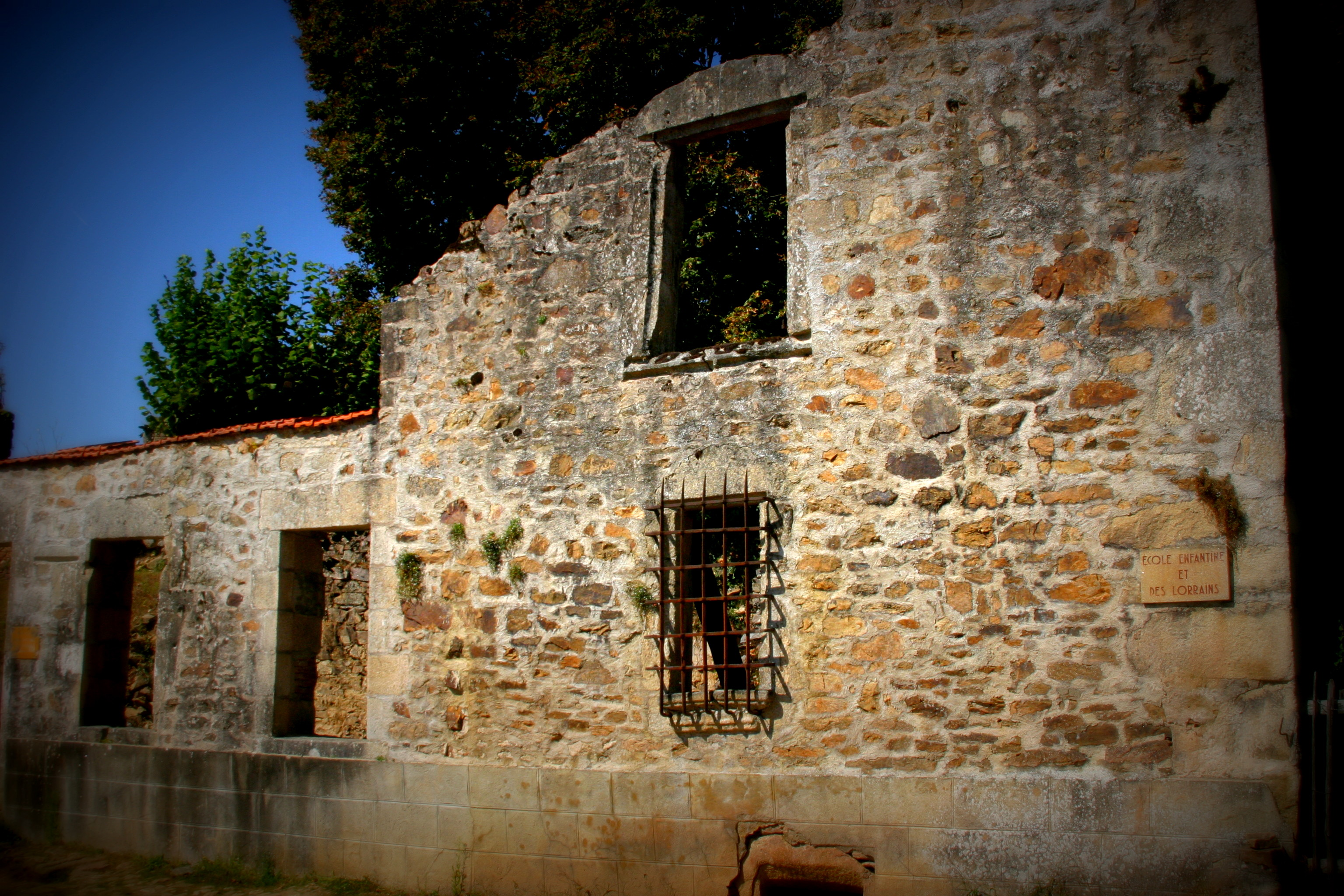
Infants School - Oradour-sur-Glane, Limousin, France
Infants School – Oradour-sur-Glane, Limousin, France

A memorial to a family, victims of the massacre, their ages ranging from 5 to 67.
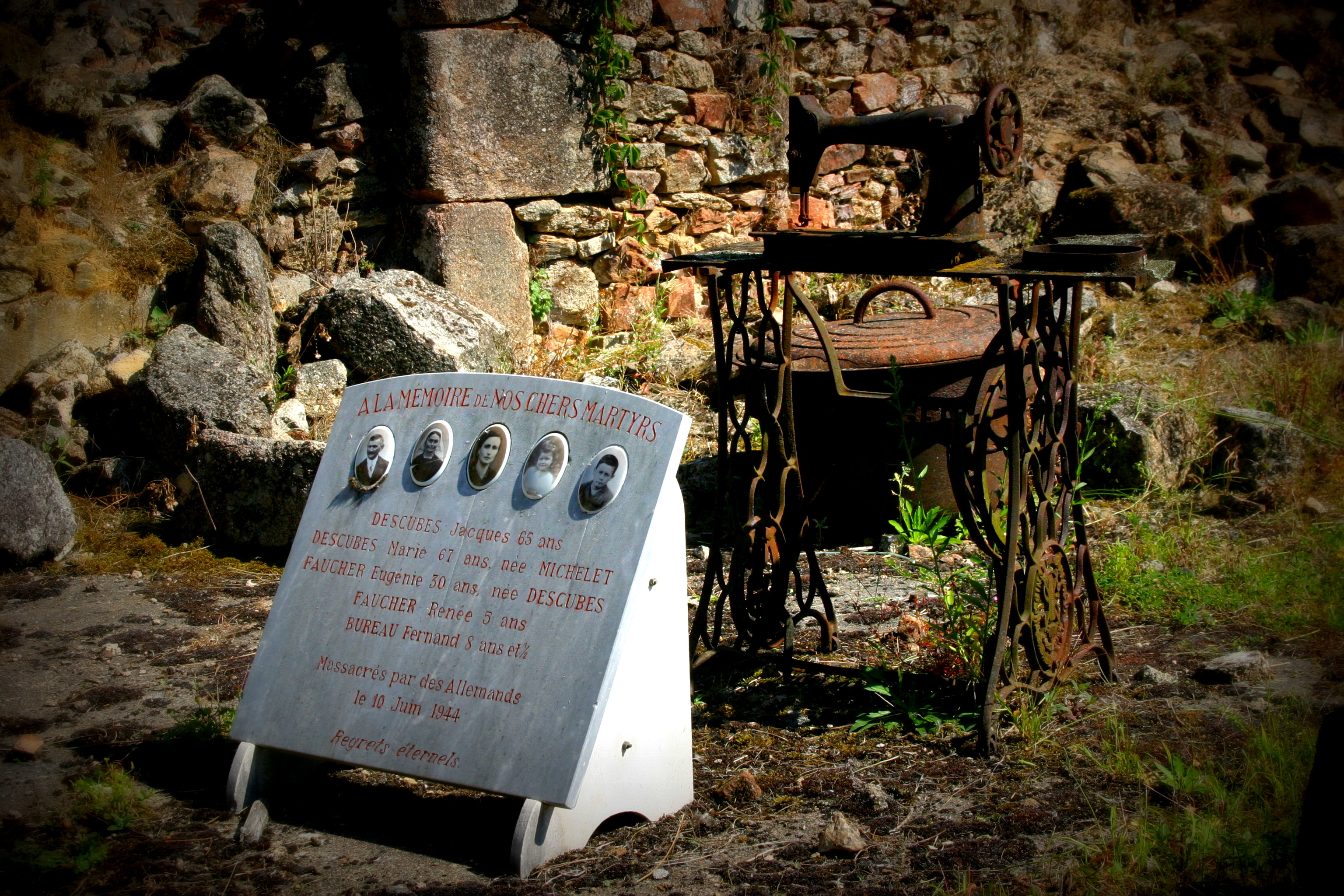
Family Memorial - Oradour-sur-Glane, Limousin, France
Family Memorial – Oradour-sur-Glane, Limousin, France

There are, in the ruins, many symbols of normal, daily life. Perhaps the one that I became most aware of is the sewing machine. It seems that almost every house had one and the body of such machines is the lasting reminder of the fact that these were indeed, people’s homes.
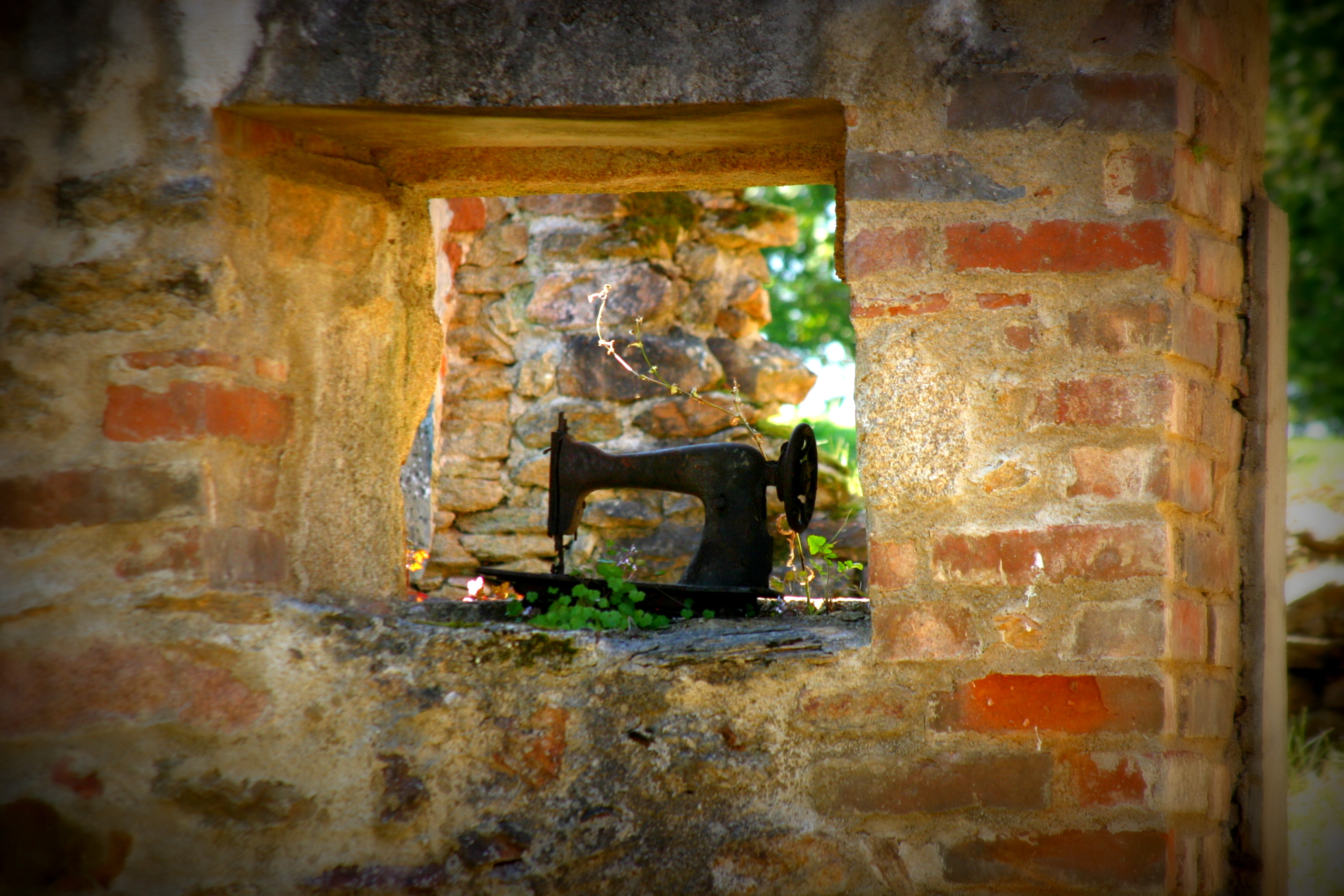
Sewing Machine - Oradour-sur-Glane, Limousin, France
Sewing Machine – Oradour-sur-Glane, Limousin, France

Other reminders are scattered around the ruins. The ornate metal frames of beds, perambulators, bicycles and cooking pots all serving as a memorial to the lost people of this village.

Bicycle - Oradour-sur-Glane, Limousin, France
Bicycle – Oradour-sur-Glane, Limousin, France

I found myself getting angry as I walked around the ruins of this once prosperous village. Angry, not just at the men that had perpetrated this act of barbarism, but also, at the fact that despite the many years that have passed, human kind still hasn’t learned the lesson.

In the last seventy years, since Oradour, there have been many, many events that can be classified as massacres. Some, initiated by disturbed individuals, but many carried out by armed military against unarmed and non military people. There have been too many such incidents.

The sad thing is that they are still happening, perpetrated in the name of religion, race or “I was just following orders”.

Limousin, France – Day 6


Day 6, Wednesday, designated a relaxation day. Although the sun was shining on the gite, the view across the valley was very misty.

La Porcherie, France - A misty morning as viewed from the gite
La Porcherie, France – A misty morning as viewed from the gite

As usual I made the journey into Masseret to obtain fresh bread and as is my wont, en-route back to the gite I made a small detour.

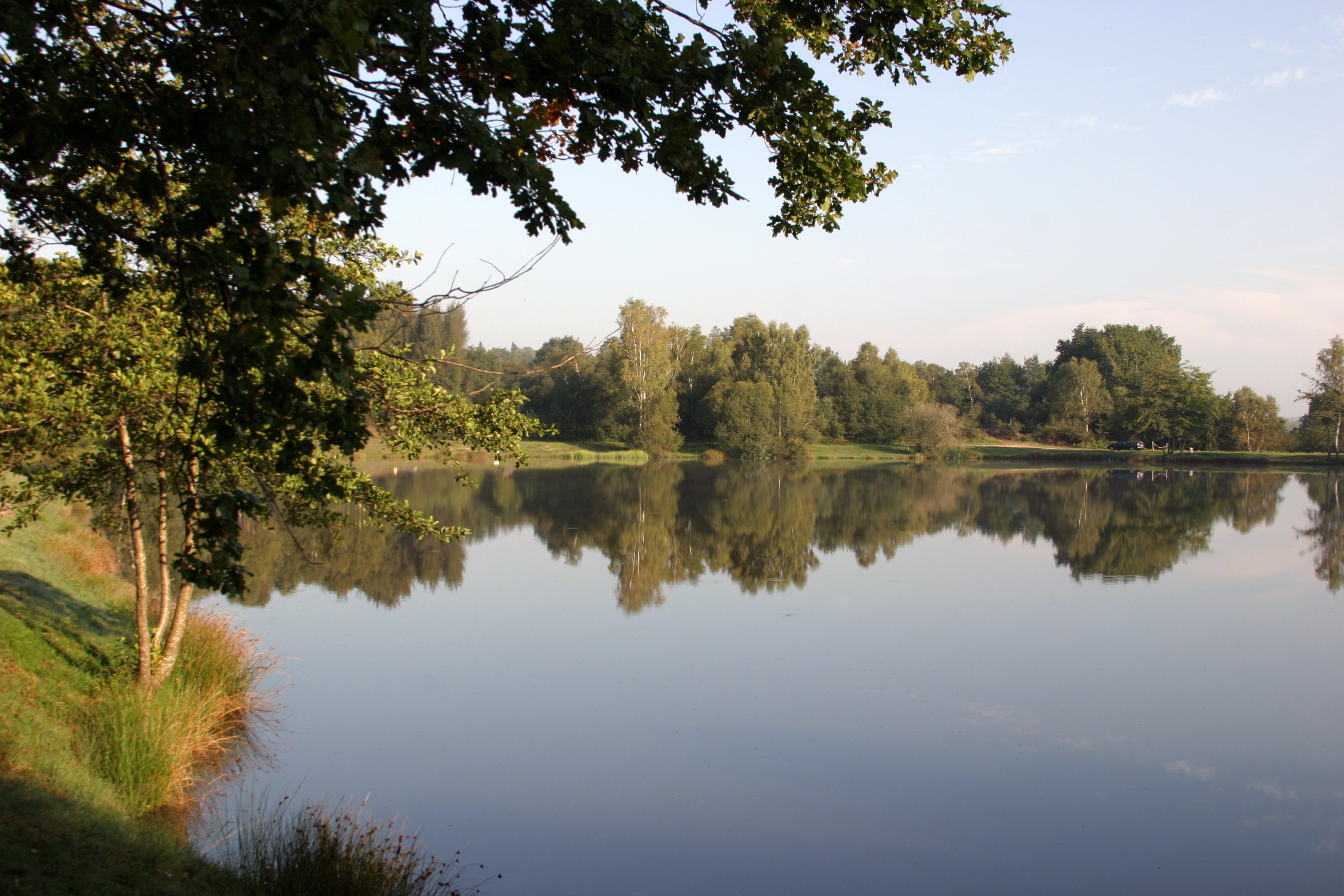
The start of  some of our previous excursions had taken us past a sign, at the entrance to a small lane, indicating that it  serviced something or somewhere called Landes du Pierres du Mas. Being inquisitive by nature I decided to find out what was what and after following the lane which meandered for maybe a mile or two I was rewarded with a beautiful view.

etang des Pierres du Mas  -  The Pond of Pierre Mas
etang des Pierres du Mas – The Pond of Pierre Mas

Here I met a gentleman who introduced himself  with a hearty “Good Morning” and laughed at the surprised expression that must have been on my face. I had expected at least a “Bonjour” and had, as he approached, been preparing my best franglaise. His immediate interest was to see if I was planning to fish as the pond is owned / administered by  the local fishing association. I assured him the only thing that I was fishing for was a decent photograph, or two. As we were talking I discovered that he was a brit and that he originated from Little Missenden in Buckinghamshire. He has been in France for over thirty years and had originally come over as a shepherd, working a farm north of Limoges. He eventually took over the farm but had sold up and was now living in La Porcherie and fulfills the role of  “guardien de peche”.  During a pleasant conflab he explained that Landes du Pierre du Mas roughly translated to “the moors of Pierre Mas” and that anywhere we see “landes” indicates moors or heathland, areas of special interest.
After he took his leave, I strolled part way around the pond, disturbing a pair of kingfishers who launched themselves across to the far bank. No chance of a photo, they were almost supersonic. This brief sortie served to show that here was a venue that deserved a longer visit but rumbles in my stomach told me I was long overdue for heading back to the gite for breakfast.

Later in the day a couple of us headed out to walk the lanes again, this time heading away from the centre of La Porcherie. We hadn’t traveled very far when we came to an almost complete stop. Having discovered a hazel tree loaded with nuts we spent a few minutes cracking the shells and enjoying the contents.. Moving on, we hadn’t gone very far when we stopped again. This time it was Sweet Chestnuts that were on the menu. This was how our walk progressed, walk a bit, much a bit, walk a bit more. The nuts were supplemented by the blackberries we discovered in the hedgerows. Very healthy.

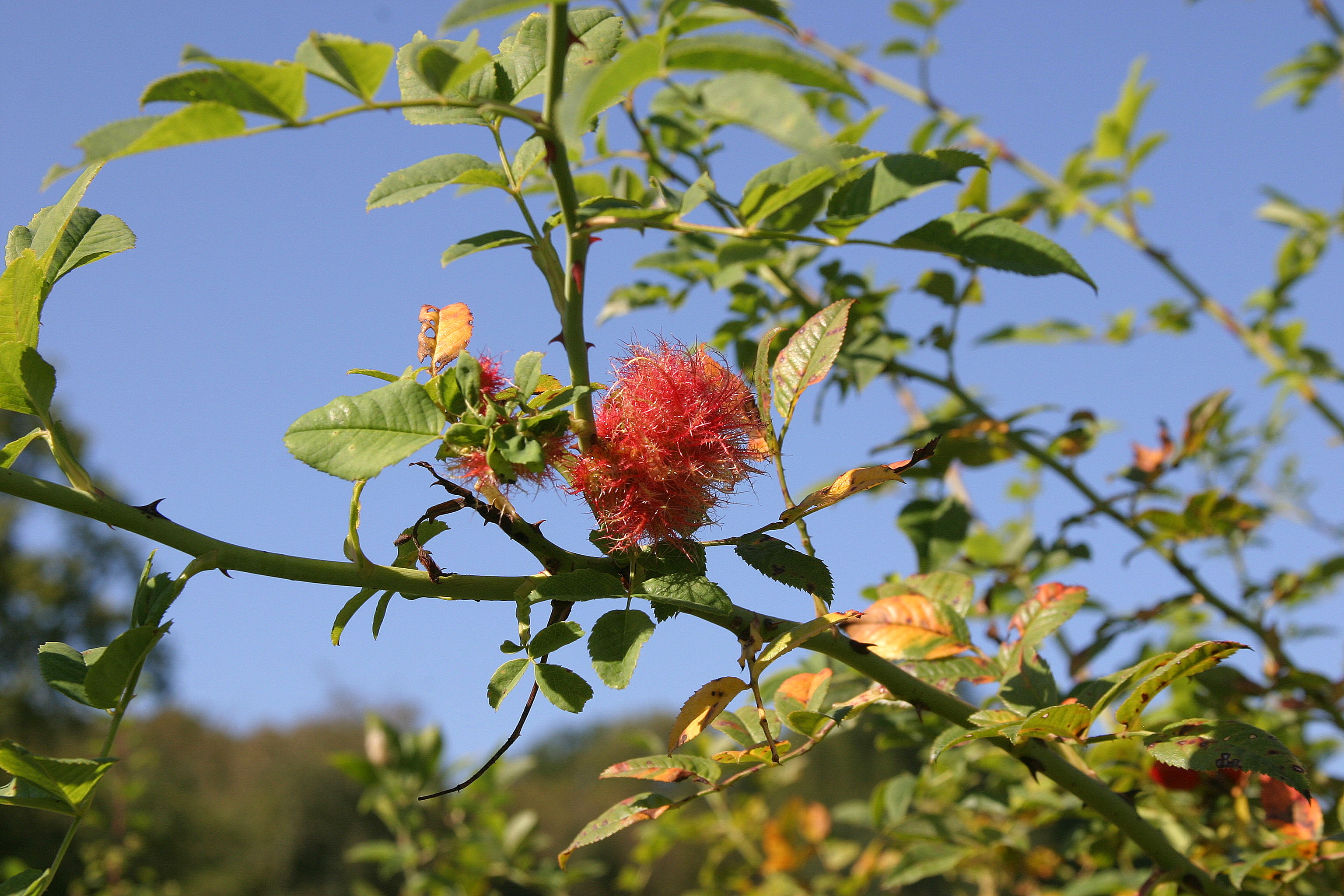
Not sure what this is ? Appears to be on a rose plant

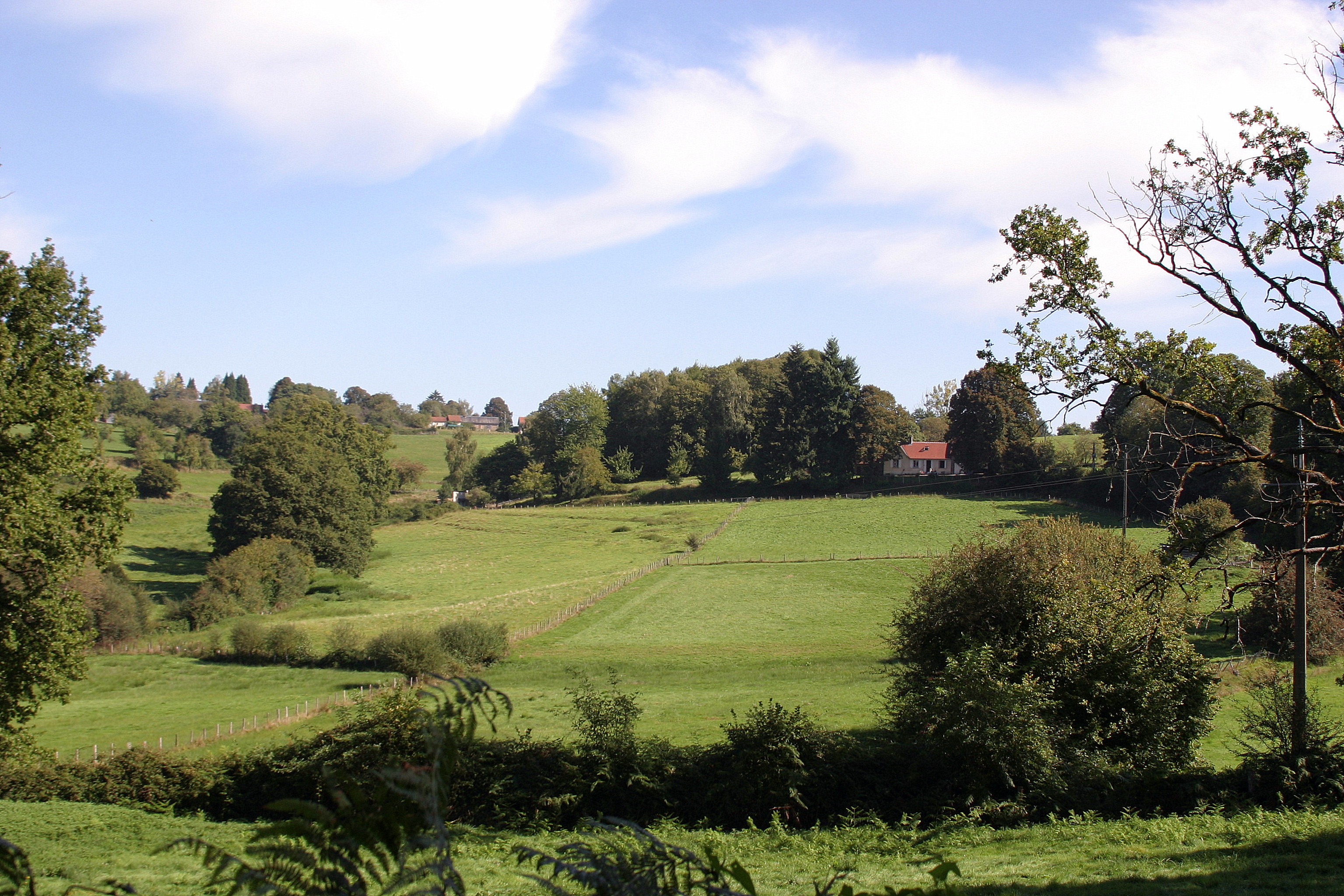
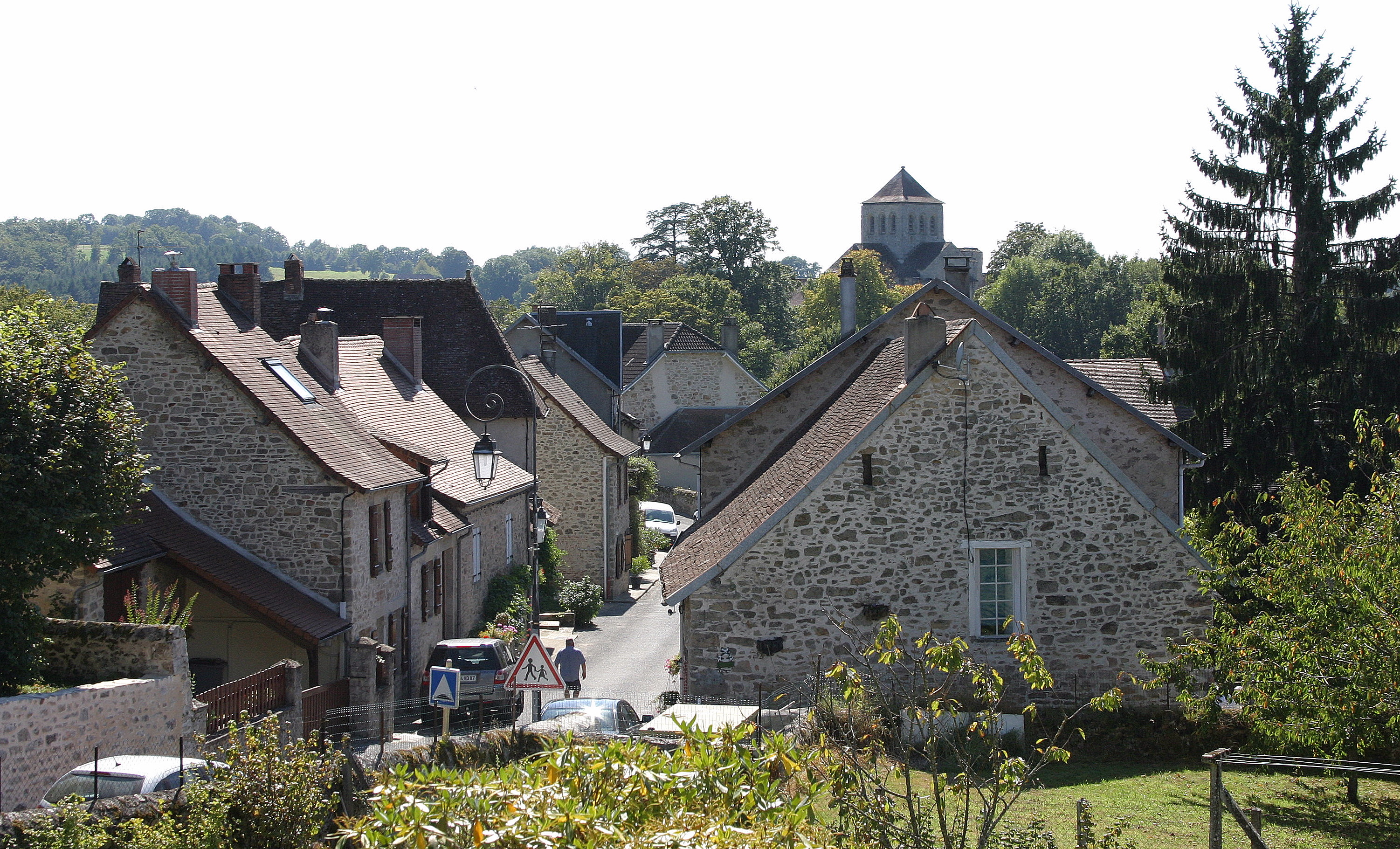
Our route around the lanes took us to a point where we could look back at the gite and on towards La Porcherie.

Puy Archer, La Porcherie, Limousin, France

The view from the lane, over the pond, back towards La Porcherie demonstrates just how rural this area is. Beautiful.

Countryside, La Porcherie, Limousin, France

Although our walk did not cover many miles it kept us occupied  with so many beautiful things. Berries and Harebells in the hedgerows, blue Cornflowers (?) in the fields …

Cornflowers (?)
Cornflowers (?)
"Tangle" Berries
“Tangle” Berries

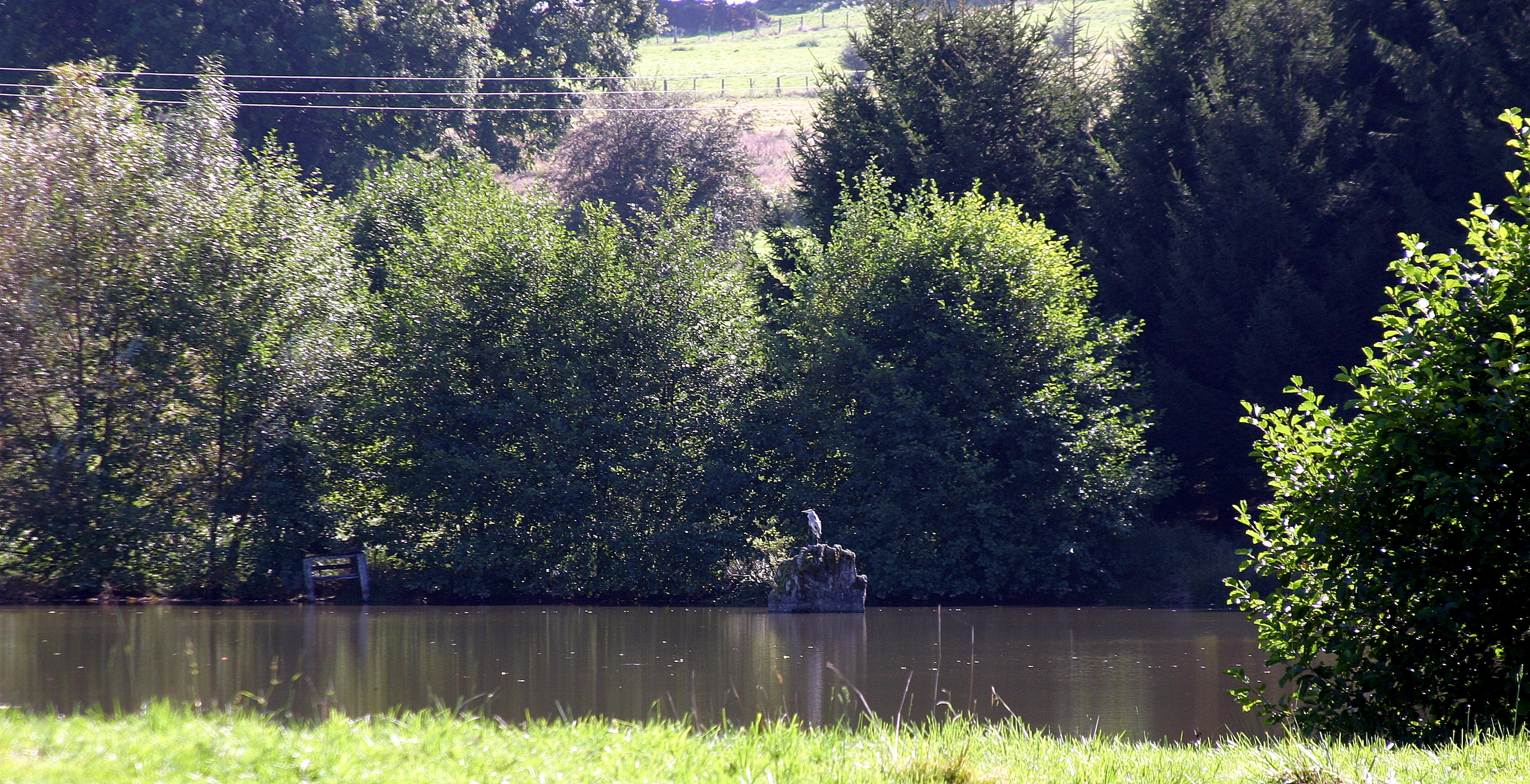
One thing noticeably in abundance around the gite are birds, birds of all varieties. Our perambulations were regularly punctuated by the cries of  large birds soaring out over the fields. Obviously birds of prey, but we never got a really good look at them. They certainly did not come close enough for us to be able to make a positive identification. Of course it would have been helpful if we had taken the binoculars along with us. That would be the ones sitting in the glove box of my car. My guess would be that they were kites or buzzards, judging  by their size. However, the heron posing on a rock in the pond was a little easier to identify. I think the beak was a bit of a give away.


Heron - pond, La Porcherie, Limousin, France
Heron – pond, La Porcherie, Limousin, France

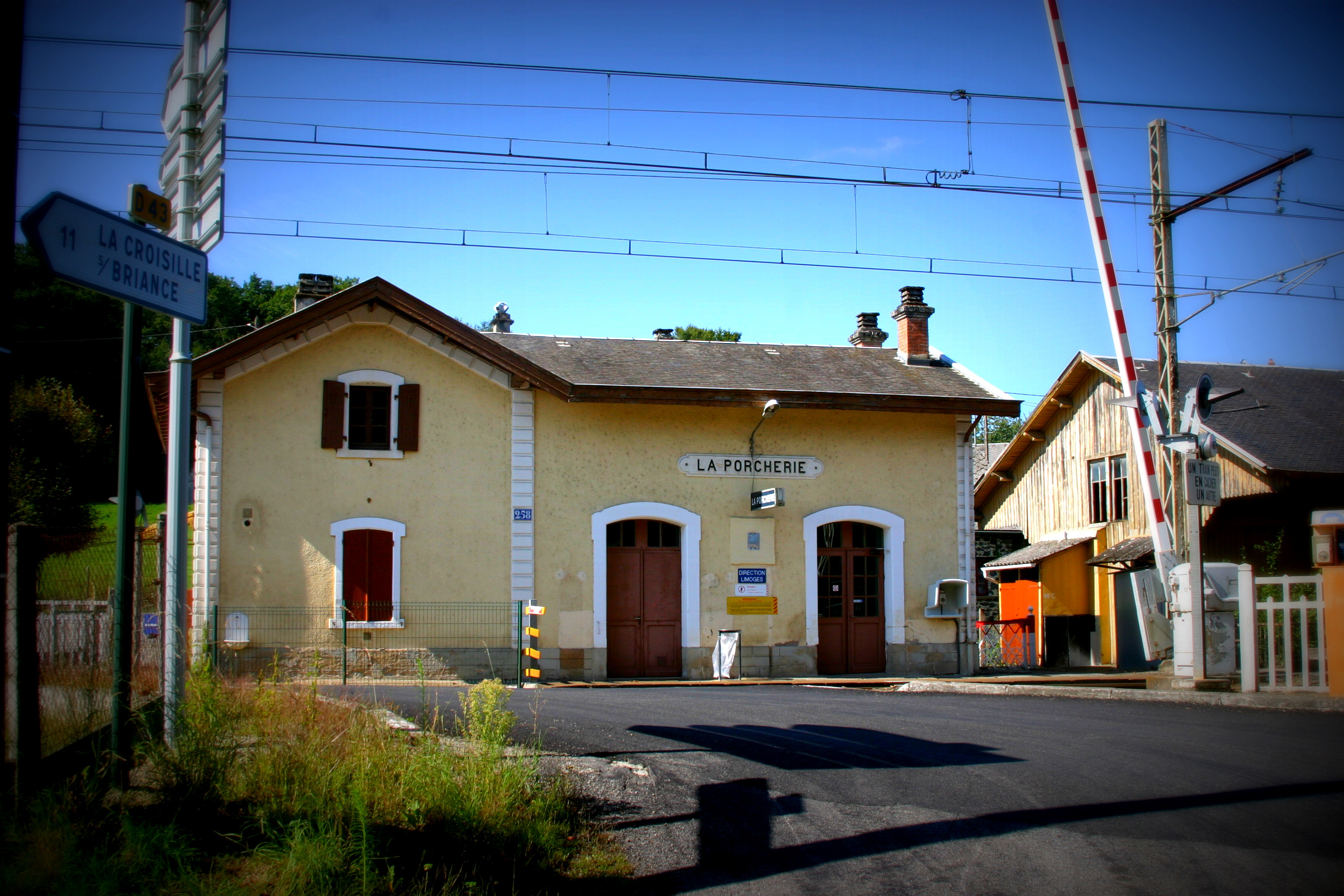
Having seen a few trains passing in the distance, we decided to take a detour to the station at La Porcherie.

station
Station – La Porcherie, Limousin, France

Probably not a good idea but it had to be done.

tracks
Railway Lines – viewed from the station at La Porcherie, Limousin, France

As we headed back towards the gite we passed this sign which was very informative. Unfortunately the site that it was telling us about was fenced off with nothing to see from our position on the road.

Motte Feodale du Chateau Vieux - La Porcherie, Limousin, France
Motte Feodale du Chateau Vieux – La Porcherie, Limousin, France

The gist of this is that, back in the 11th Century, there was built a “castle” on an earthen mound with a moat. This type of construction was introduced during the 10th Century but was eventually replaced by stone construction during the late 12th Century. My translation may be a bit flaky but it seems that this place was home to a family called De La Porcaria. This area was a centre for agriculture and in particular “pig breeding”. La Porcherie translates literally to The Pigsty.

So my holiday for 2014 was spent in The Pigsty.

La Porcherie, France – Sunrise & Sunset


La Porcherie, France - A misty morning as viewed from the gite
La Porcherie, France – A misty morning as viewed from the gite
La Porcherie, France - A glorious sunset.
La Porcherie, France – A glorious sunset.

Limousin, France – Butterfly


Beautiful butterfly - Flew into reach of my lens while I was visiting Collonges-la-Rouge in the Correze.
Beautiful butterfly – Flew into reach of my lens while I was visiting Collonges-la-Rouge in the Correze.

Limousin, France – Day 5


If it’s Tuesday,  it must be Collonges-la-Rouge. What the heck is that ?,  you may ask.

Selected as the target for a visit from yours truly this beautiful medieval village, some eighty kilometers from our gite, is listed as one of the “Most Beautiful Villages Of France” and is entirely built from a red sandstone which comes from the Habitarelle massif.

Collonges-la-Rouge, Correze, France - A hint at what makes this one of the most beautiful villages in France
Collonges-la-Rouge, Correze, France – A hint at what makes this one of the most beautiful villages in France
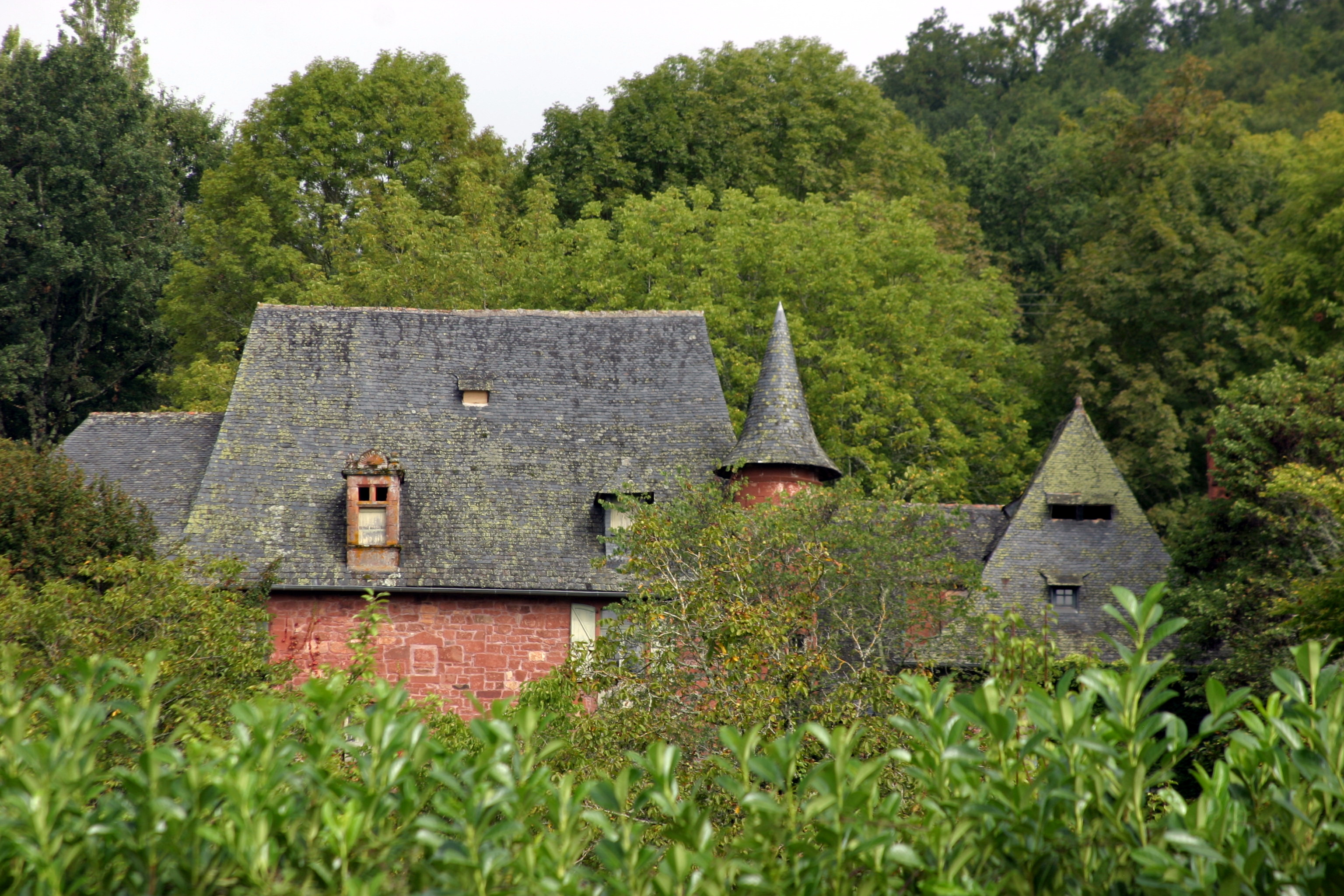
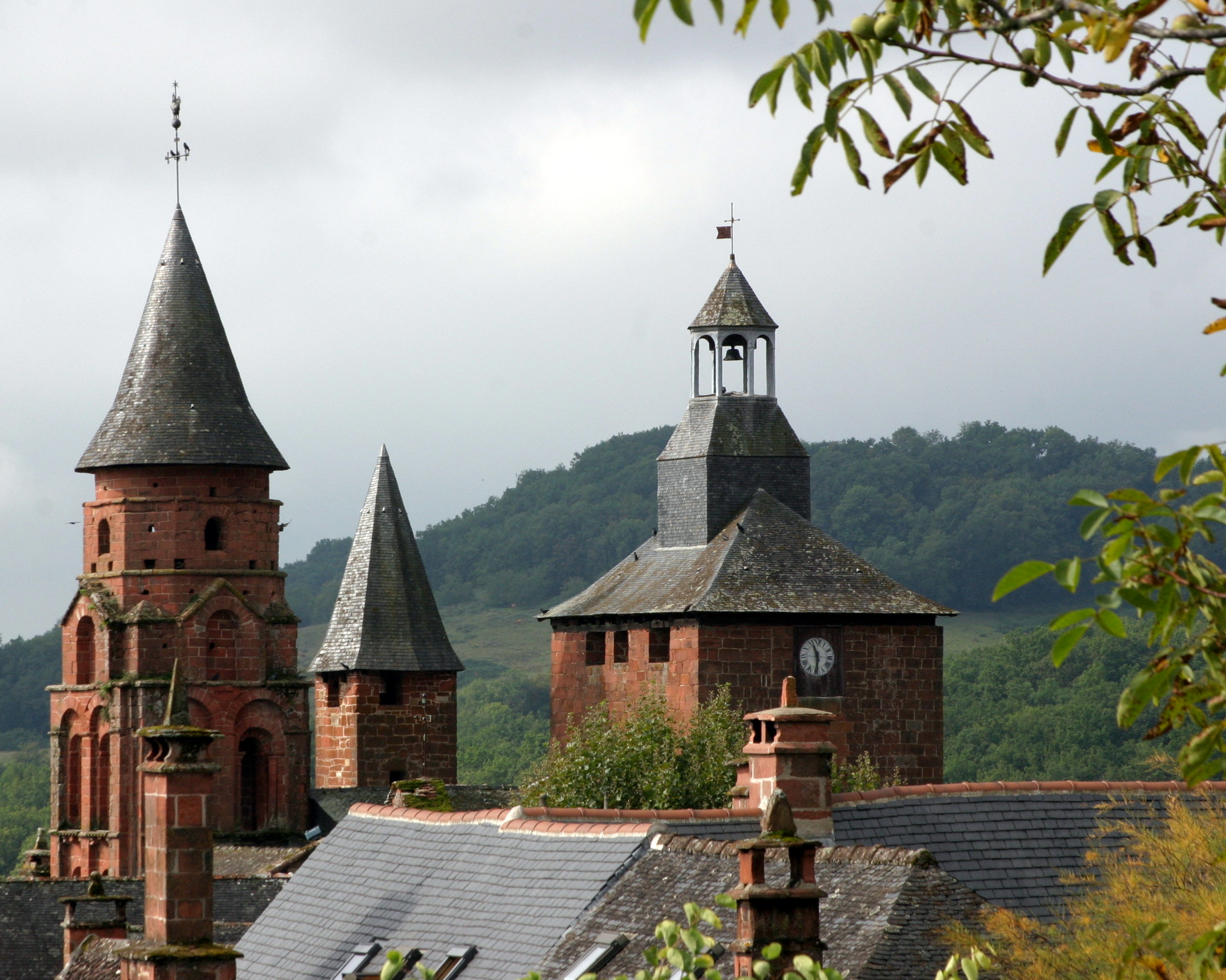
Collonges-la-Rouge, France - Saint-Pierre church's steeple and other roof features
Collonges-la-Rouge, France – Saint-Pierre church’s steeple and other roof features
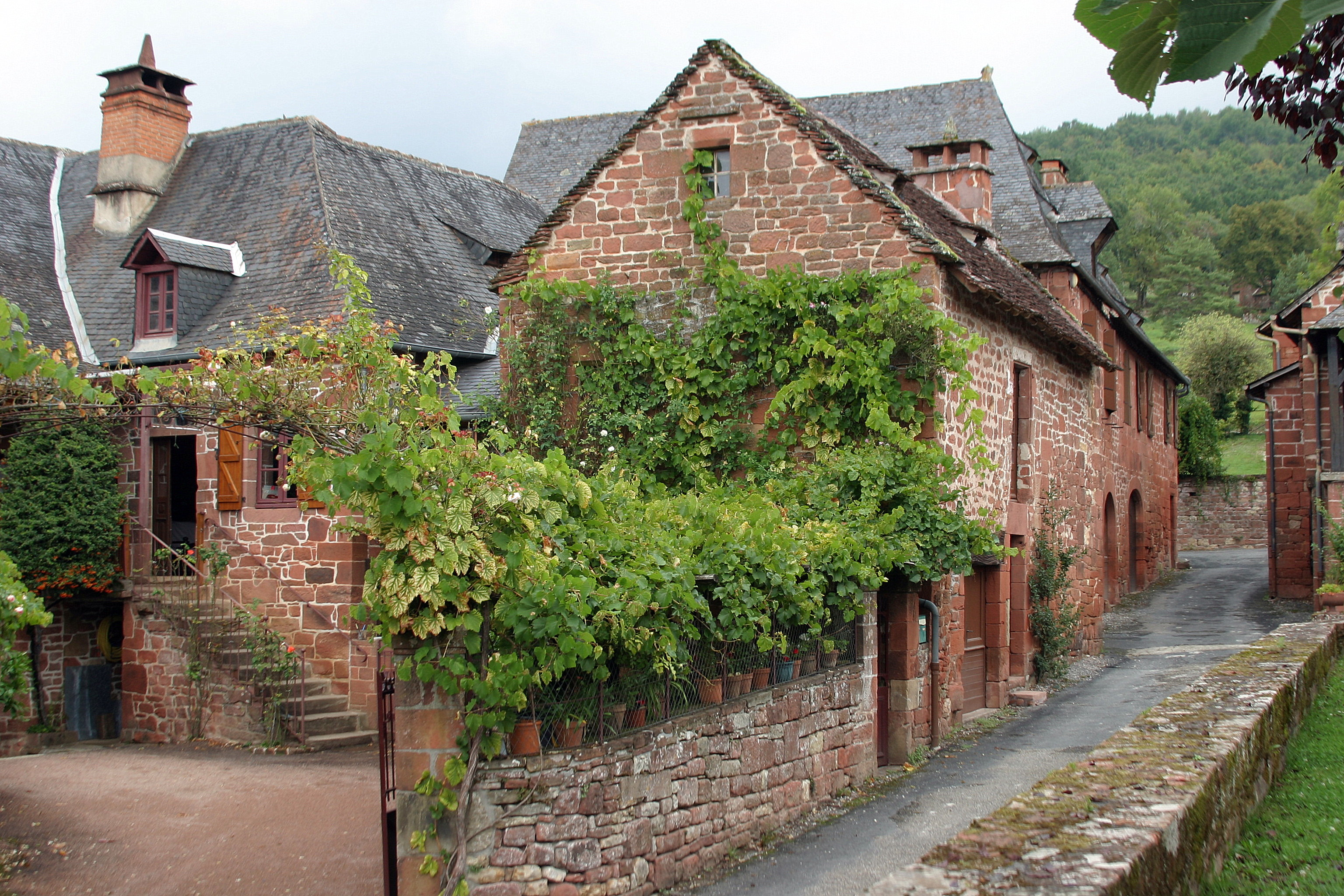
Collonges-la-Rouge, France - quaint streets
Collonges-la-Rouge, France – quaint streets
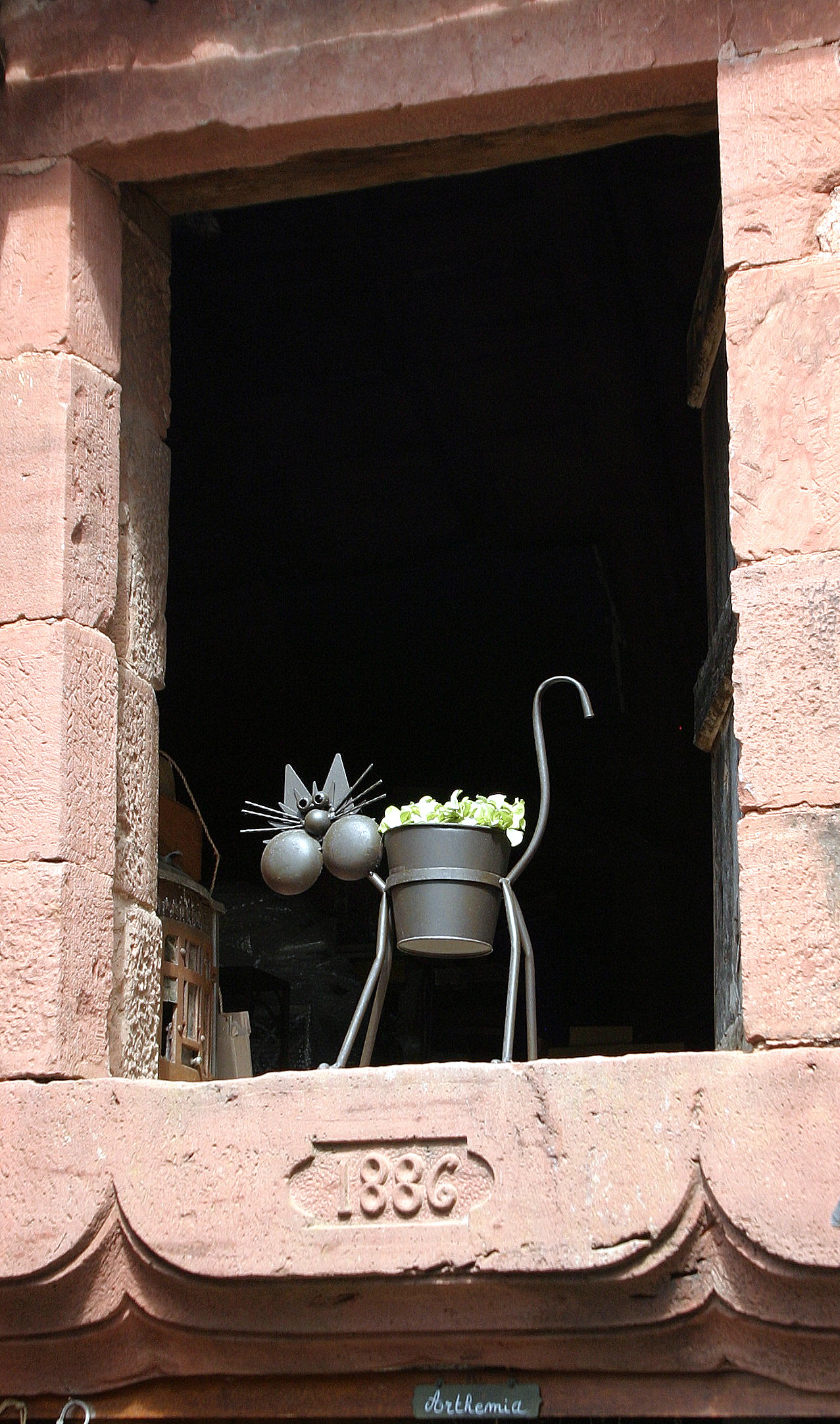
Collonges-la-Rouge, France - Le Chat
Collonges-la-Rouge, France – Le Chat
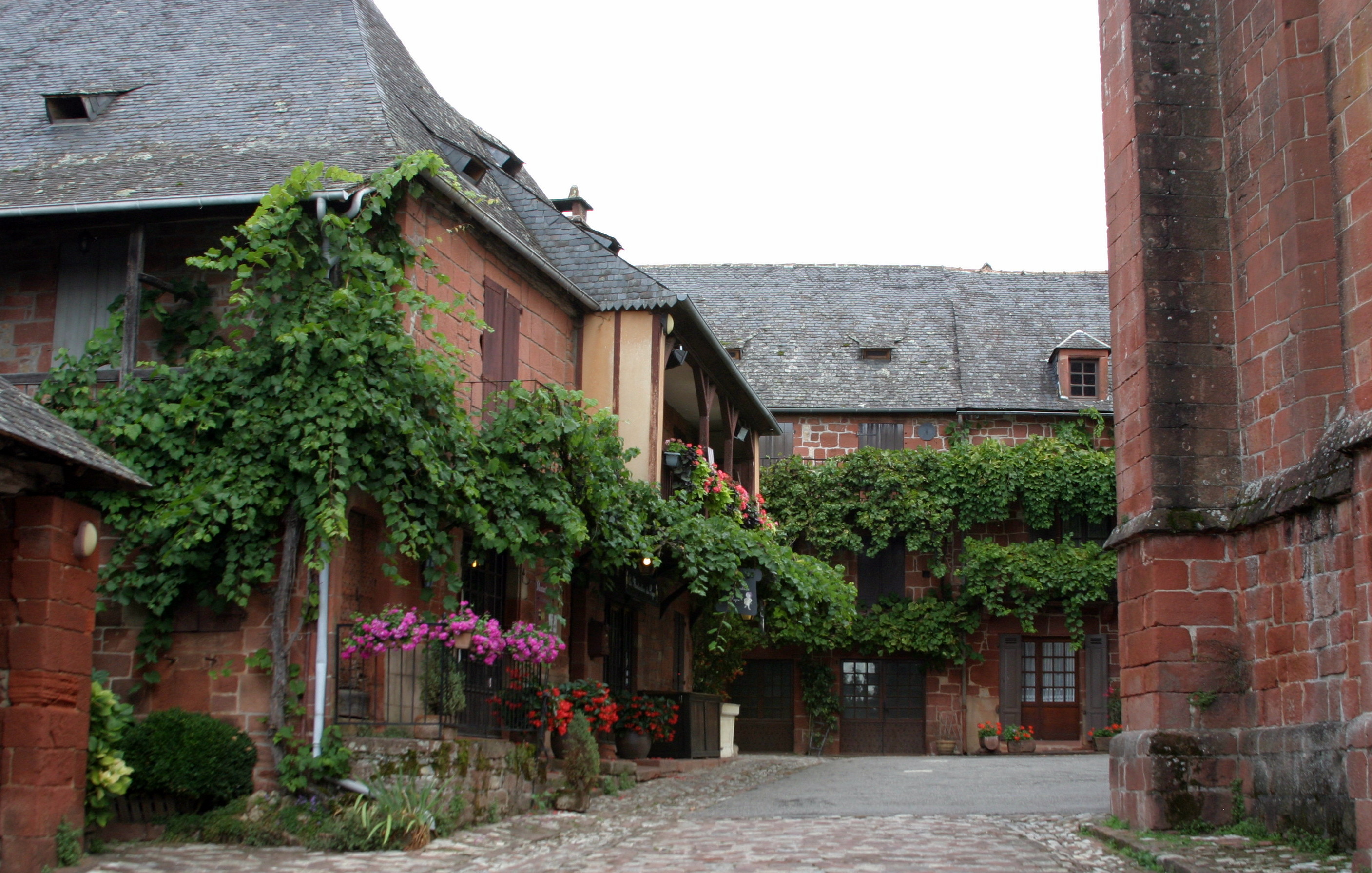
Collonges-la-Rouge, France - Street view
Collonges-la-Rouge, France – Street view
Collonges-la-Rouge, France - detail from eatery.
Collonges-la-Rouge, France – detail from eatery.

After exploring the various streets and alleyways we had lunch although not in the establishment featured above. The meal was as usual, very relaxed and delicous and was accompanied by the unusual “Moutarde Violette” which is made by combining mustard with a red grape mash. The version that we were eating is produced at Turenne, just a few kilometers away from Collonges. We enjoyed it so much that we purchased a jar to bring home.

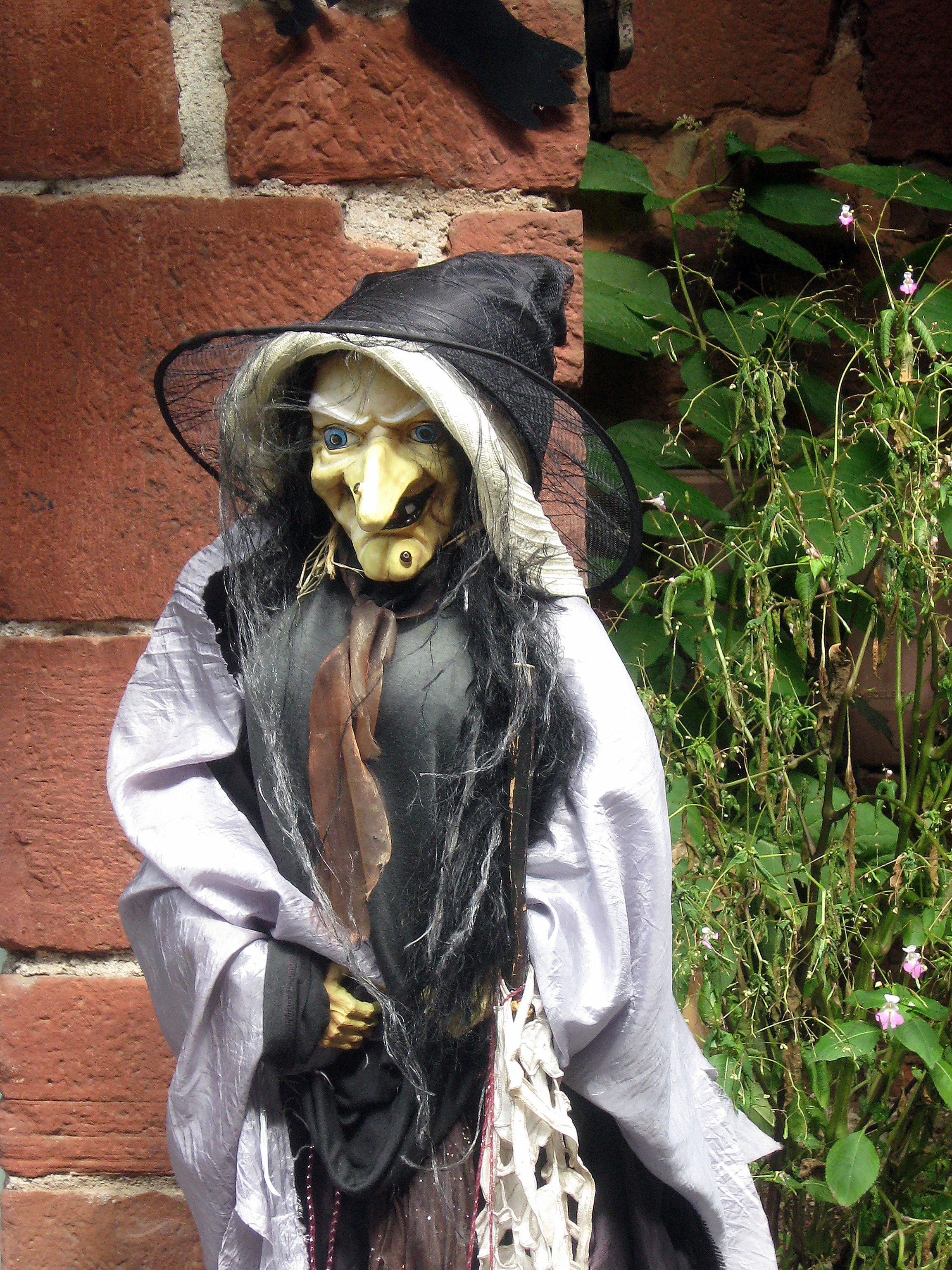
Collonges-la-Rouge, France - A local inhabitant
Collonges-la-Rouge, France – A local inhabitant

We, of course, visited the Church of  St-Pierre. The contruction of which was started during the 11th century. Further additions and modifications were made throughout the 14th and 15th Centuries and the church was fortified during the 16th century. Hence many different styles can be observed both inside and out.

Collonges-la-Rouge, France - Saint-Pierre church entrance detail
Collonges-la-Rouge, France – Saint-Pierre church entrance detail

Unusual for Collonges, the entrance way is decorated with white limestone, from nearby Turenne, although it is tinted with the red sandstone dust.

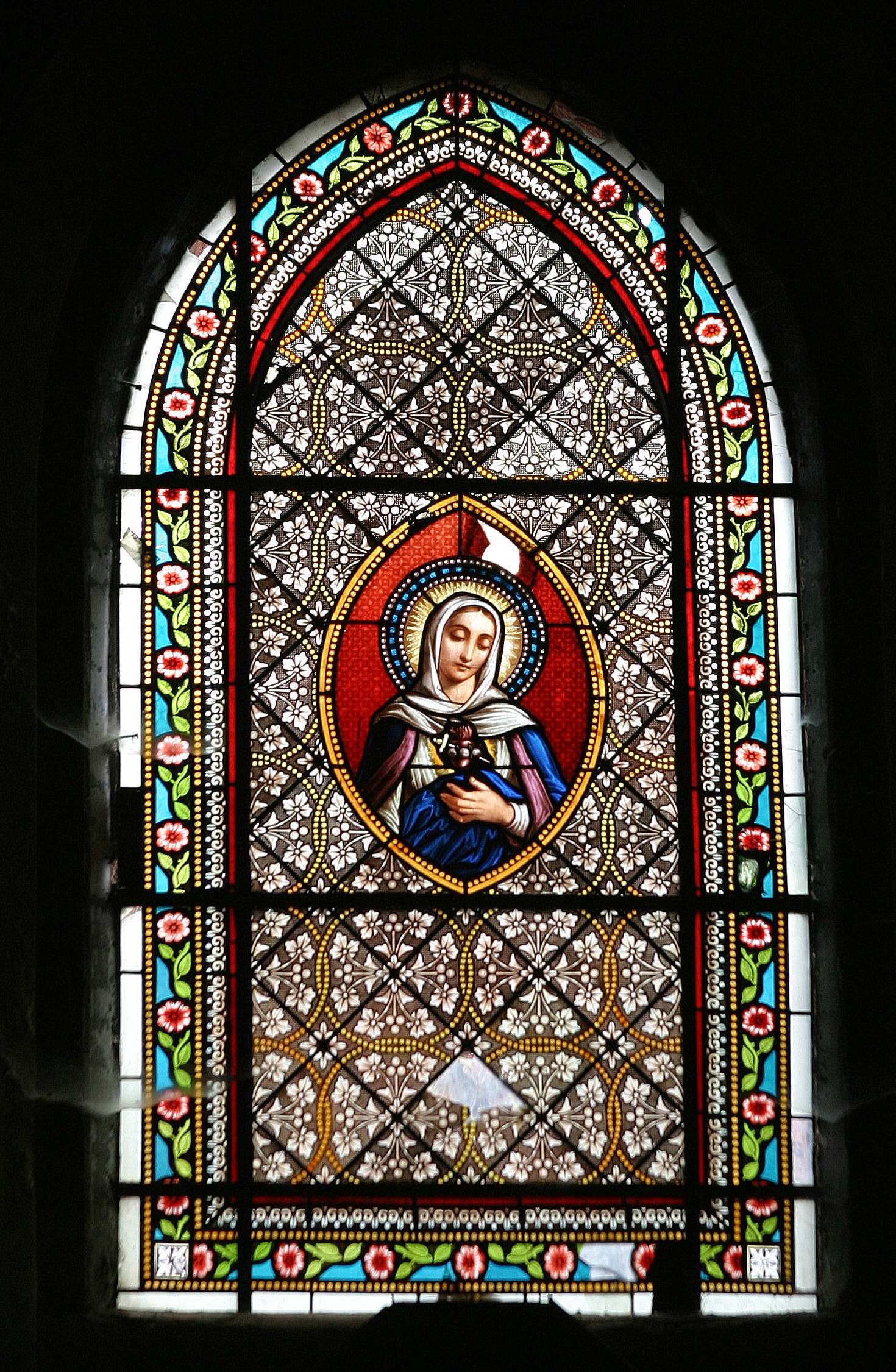
Collonges-la-Rouge, France - Stained-Glass from Saint-Pierre church
Collonges-la-Rouge, France – Stained-Glass from Saint-Pierre church
Collonges-la-Rouge, France - Saint-Pierre church detail
Collonges-la-Rouge, France – Saint-Pierre church detail
Collonges-la-Rouge, France - Saint-Pierre church's steeple
Collonges-la-Rouge, France – Saint-Pierre church’s steeple
Collonges-la-Rouge, France - view
Collonges-la-Rouge, France – view
Collonges-la-Rouge, France - Happy window
Collonges-la-Rouge, France – Happy window
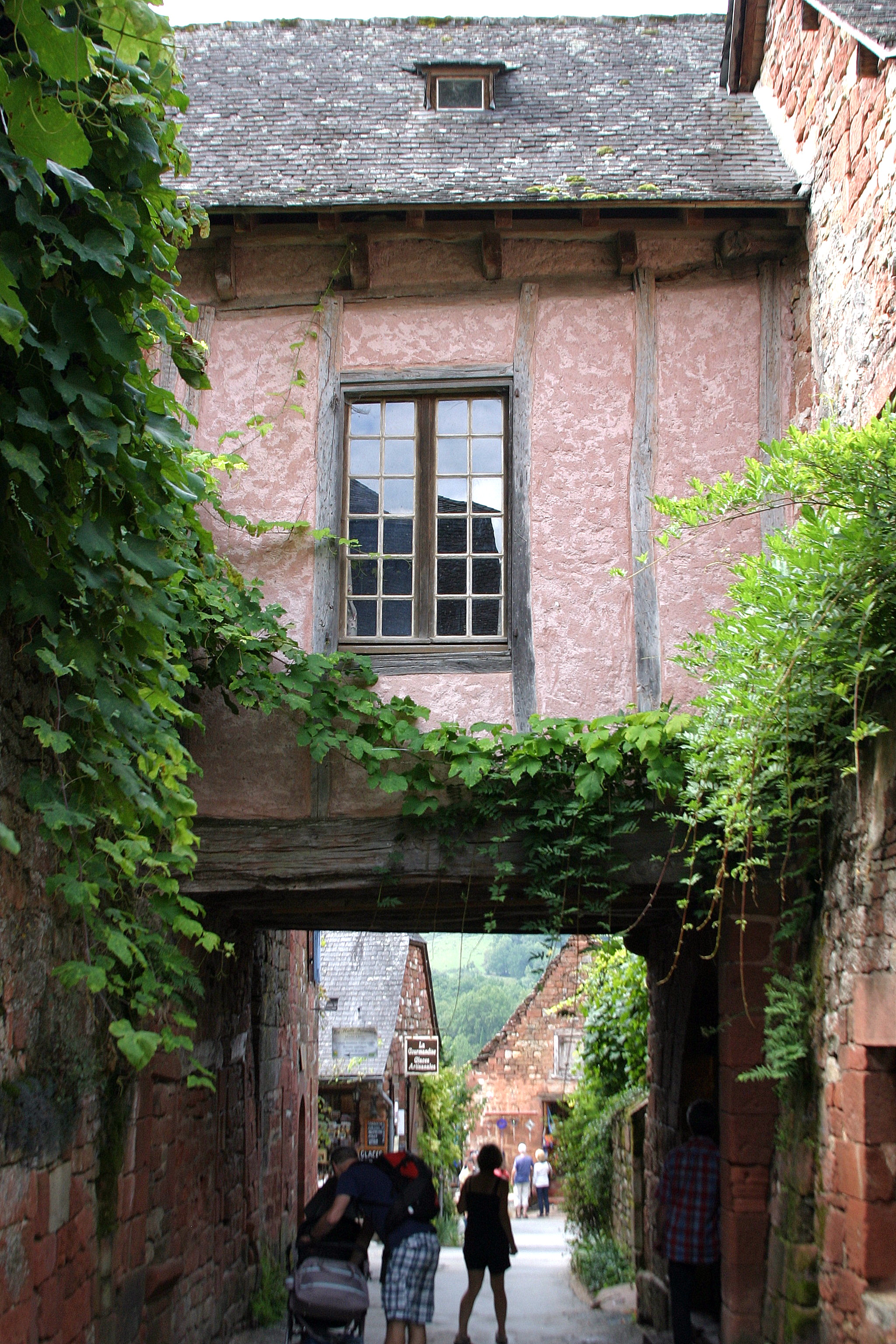
Collonges-la-Rouge, France - Through the arch
Collonges-la-Rouge, France – Through the arch
Collonges-la-Rouge, France - Archway
Collonges-la-Rouge, France – Archway
Collonges-la-Rouge, France - Twin turrets.
Collonges-la-Rouge, France – Twin turrets.
Collonges-la-Rouge, France - It's that butterfly again.
Collonges-la-Rouge, France – It’s that butterfly again.
Collonges-la-Rouge, France
Collonges-la-Rouge, France - Main street.
Collonges-la-Rouge, France – Main street.
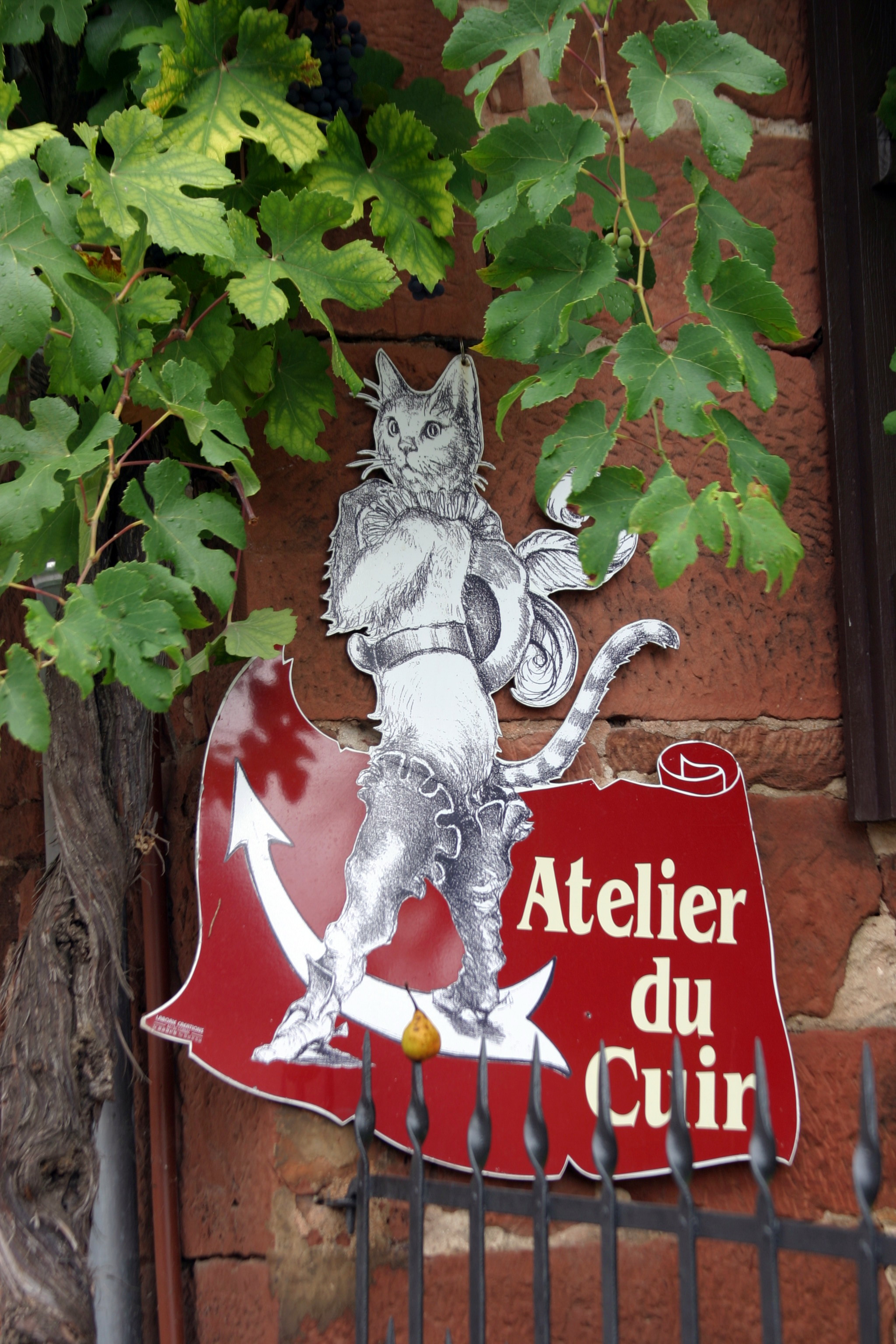
Collonges-la-Rouge, France - Leather Workshop
Collonges-la-Rouge, France – Leather Workshop
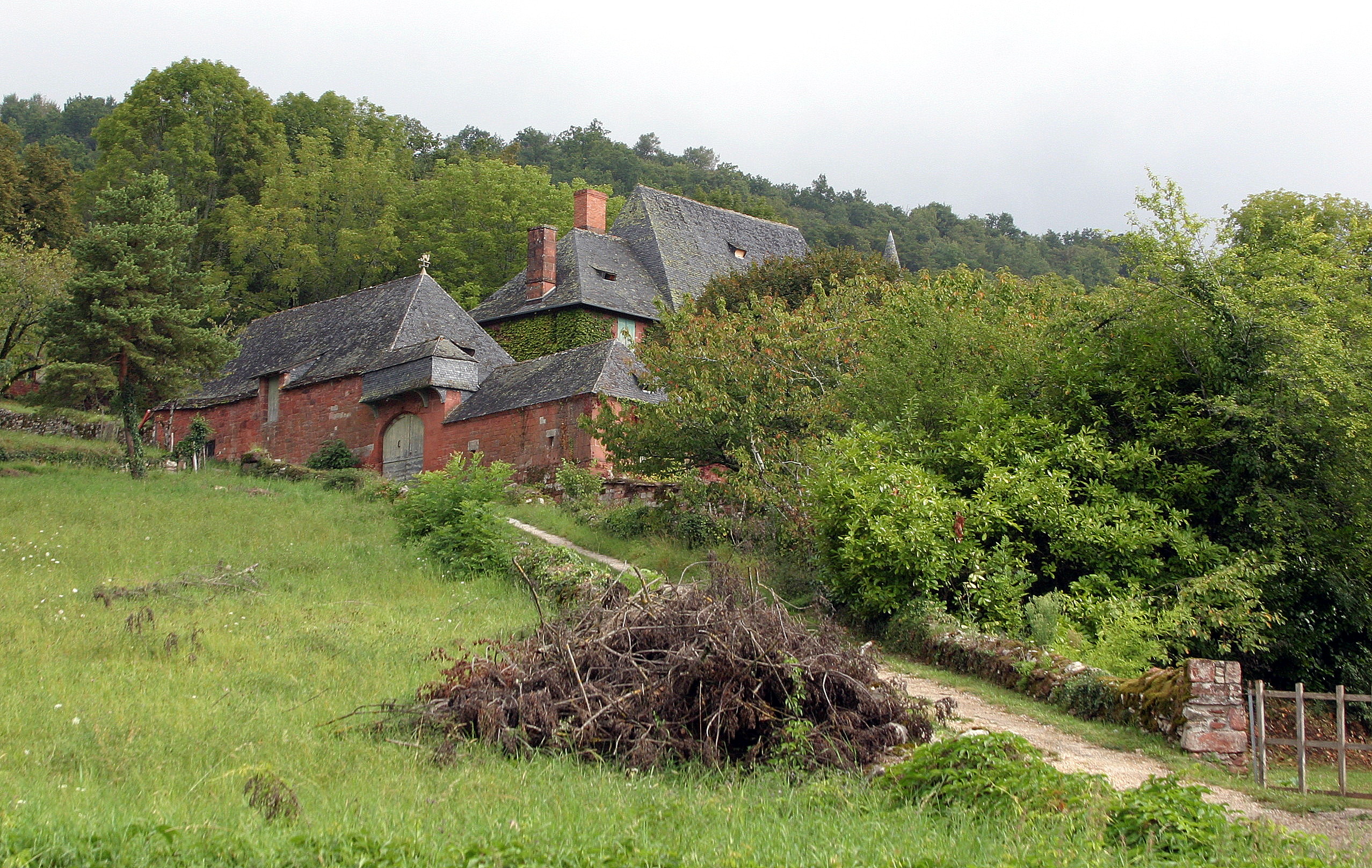
Collonges-la-Rouge, France - One of the more remote properties.
Collonges-la-Rouge, France – One of the more remote properties.
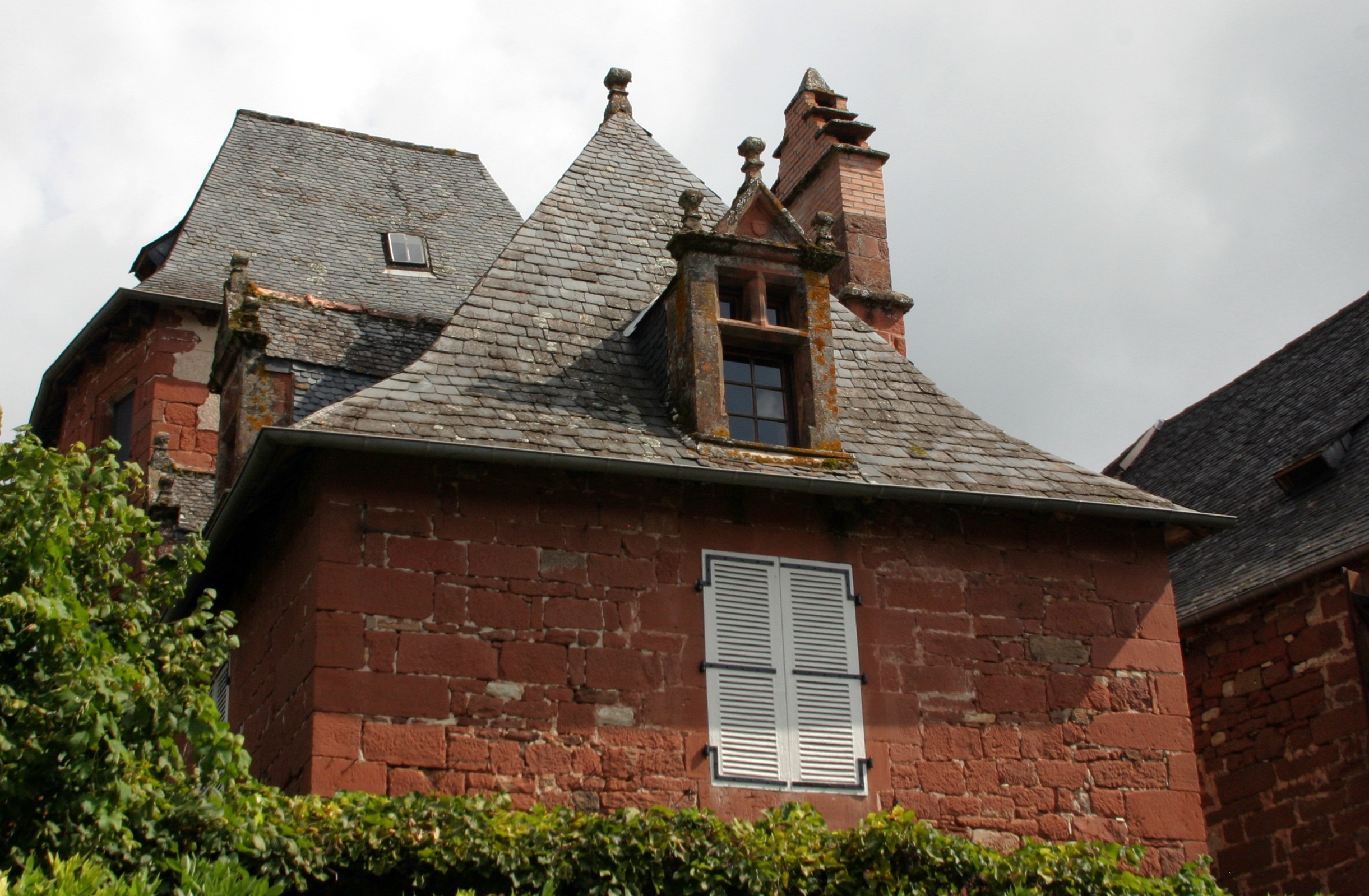
Collonges-la-Rouge, France - Another roofline shot
Collonges-la-Rouge, France – Another roofline shot
Collonges-la-Rouge, France - Another roofline shot
Collonges-la-Rouge, France – Another roofline shot
Collonges-la-Rouge, France - Quiet streets
Collonges-la-Rouge, France – Quiet streets

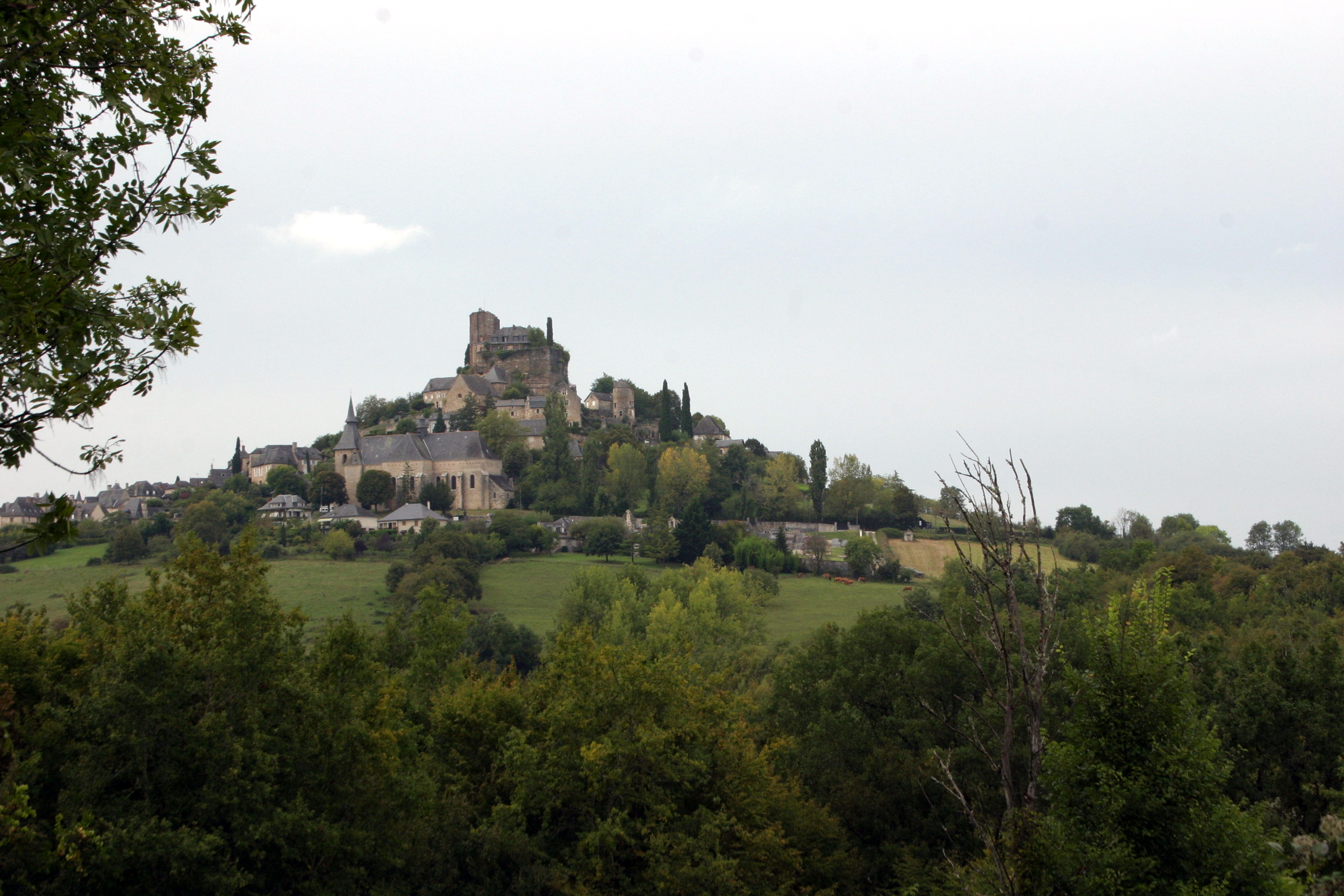
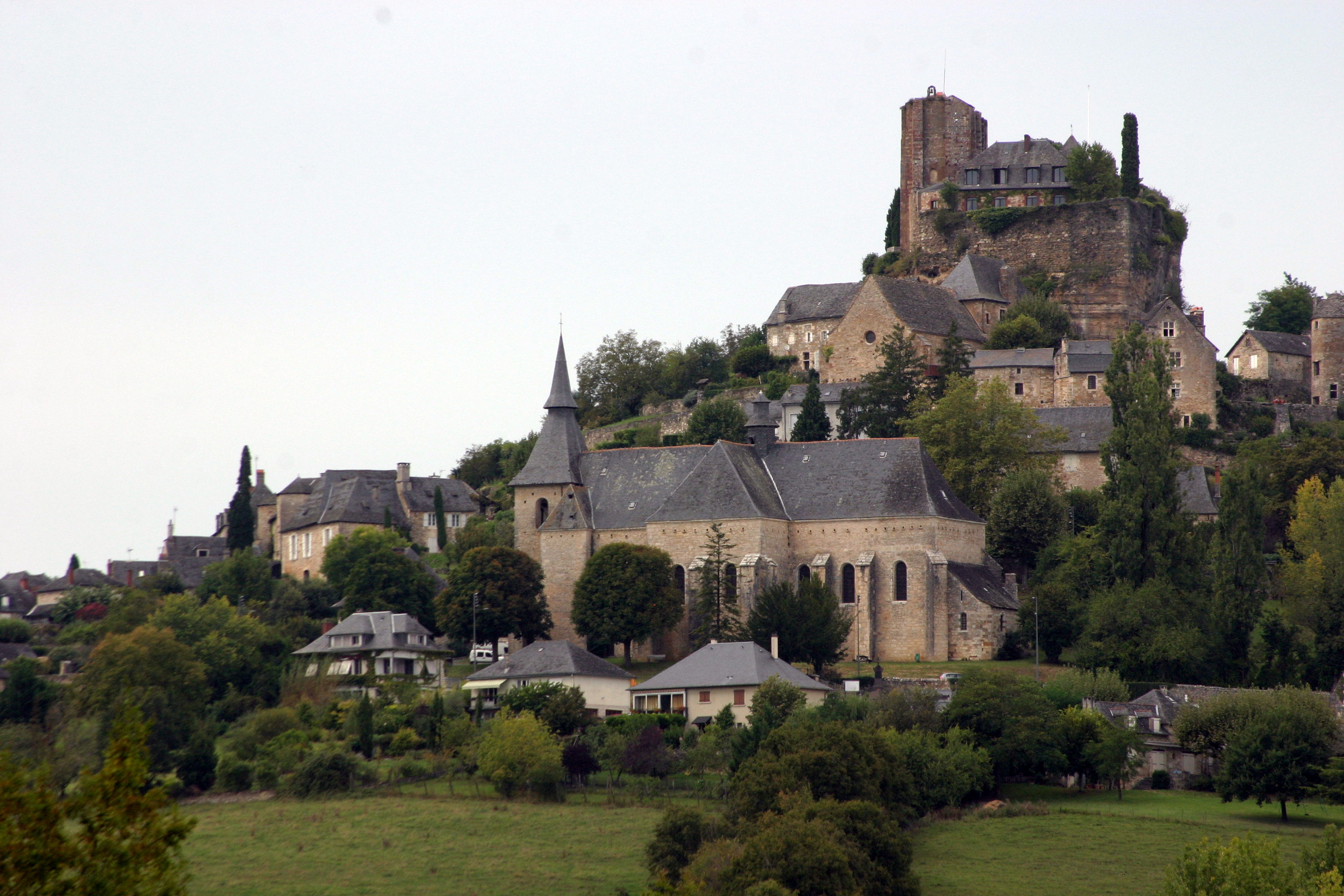
After leaving Collonges our route took us past Turenne. We opted not to visit on this occasion, just stopping to take a couple of quick snaps from afar before heading home to the gite.

Turenne, France
Turenne, France
Turenne, France
Turenne, France

Limousin, France – Day 4


It’s Monday morning and I’ve made the run to Massaret for fresh bread.

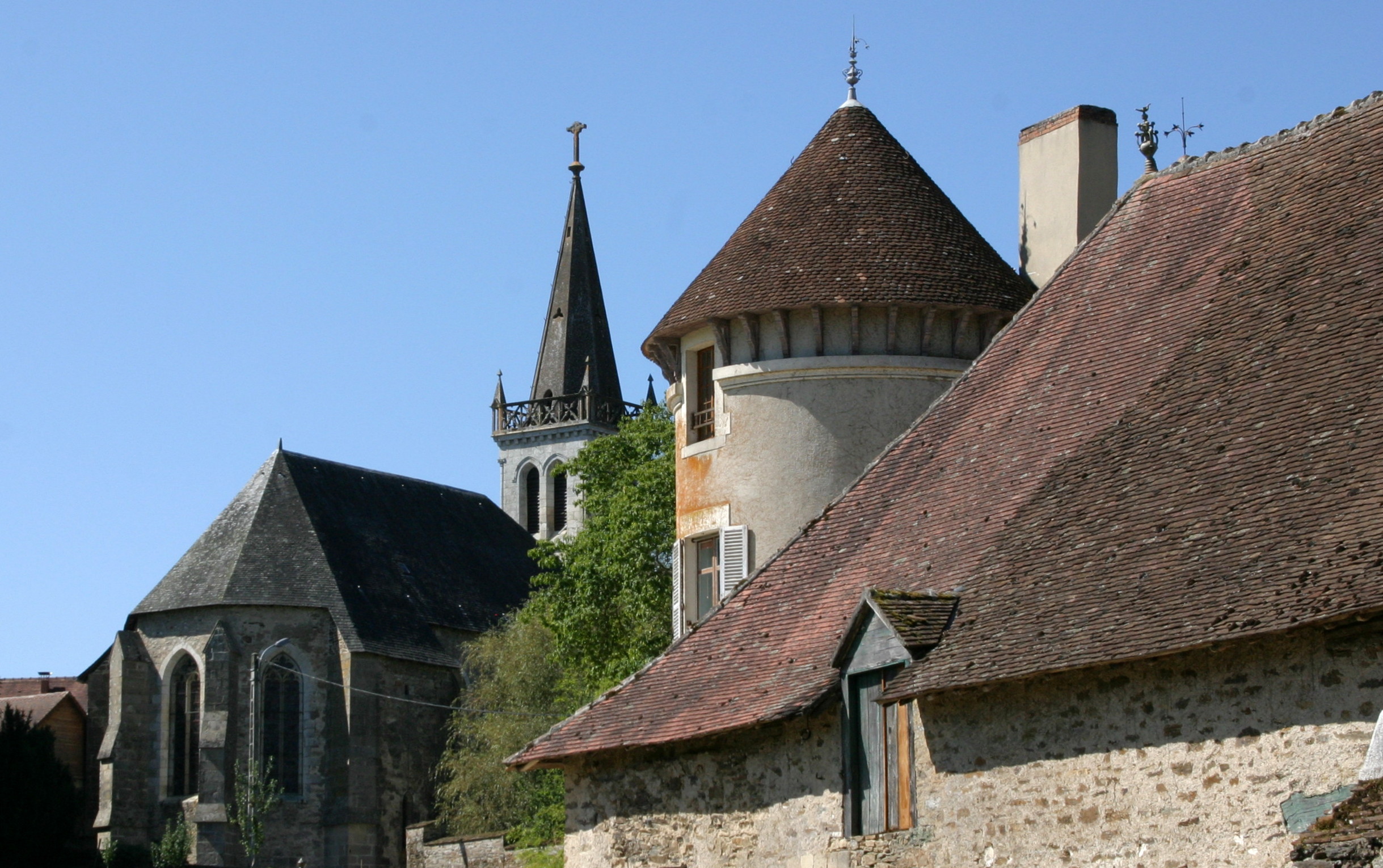
Masseret, Limousin, France - Hilltop Tower
Masseret, Limousin, France – Hilltop Tower

French bread is wonderful but it doesn’t stay fresh for long. But that’s OK because I get to meet all these friendly people. Everyone says “Bonjour” when they meet you in the street or inside the boulangerie. Then “Au Revoir” when either they or you leave the shop. It is such a refreshing change from the sullen brits who just stand there avoiding eye contact.

Masseret, Limousin, France - The 12c. Church of St. Catherine.
Masseret, Limousin, France – The 12c. Church of St. Catherine.

So this morning I request a baguette, and a boule, in my rather fractured franglais and make it known that I would like the boule sliced. Madame returns with the loaf in a bag and promptly drops it on the floor with the individual slices all trying to make a run for the space under the counter. With many typically gallic shrugs and embarrassed smiles a second boule makes its way through the slicer, into a bag and safely into my arms and back to the gite.

Today we have decided to go into Limoges for a bit of a reconnaissance. Surprisingly we make into the centre, park up and find the tourist information office all in one smooth move. We discover that there is one of those “tourist train” things due to leave from just outside the tourist office in a short while. The consensus was that this would be a quick way to orientate ourselves to the Limoges sights. Then we can cherry pick those that we want to do in detail. So into a cafe we go for a quick coffee and cake and not long after we are sat aboard in anticipation.

Limoges, France - Hotel de Ville
Limoges, France – Hotel de Ville

To describe the journey as  the ride from hell would be extreme but it was anything but pleasant. The coaches shuddered back and forth like the folds of an accordion and the cobble streets jarred our spines through the virtually non existent suspension and thin padding on the seats. I should also point out that there is an audio commentary available with translations. We were all issued with earphones but the translated commentary was fragmented possibly breaking up in harmony with the reverberations radiating through the chassis of the coaches. The translated commentary was pretty much drowned out by the volume of the native commentary blasting out over the speakers. Thankfully, after an hour it was over.

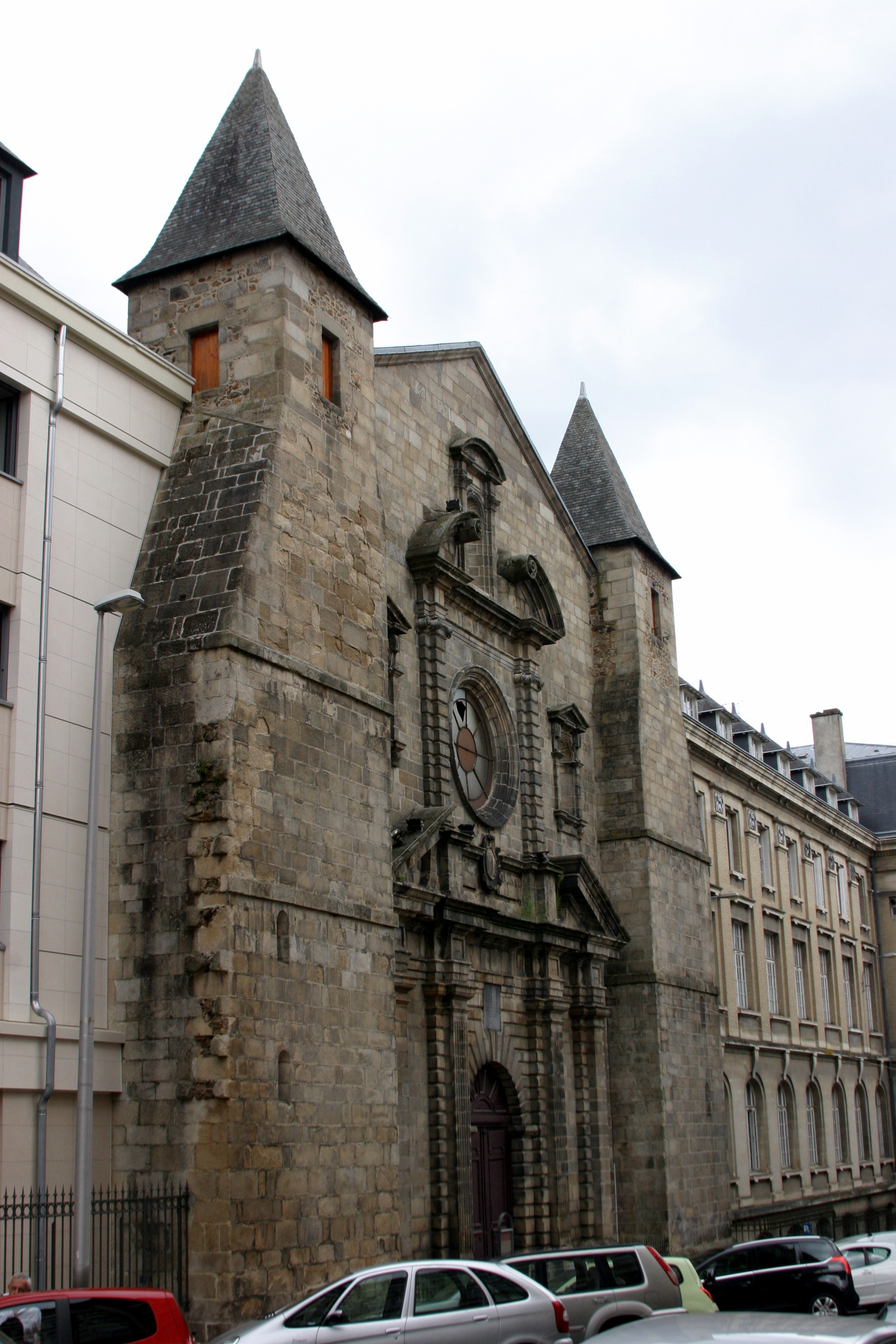
Limoges, France - Chapelle du College des Jesuites - Built 1629
Limoges, France – Chapelle du College des Jesuites – Built 1629

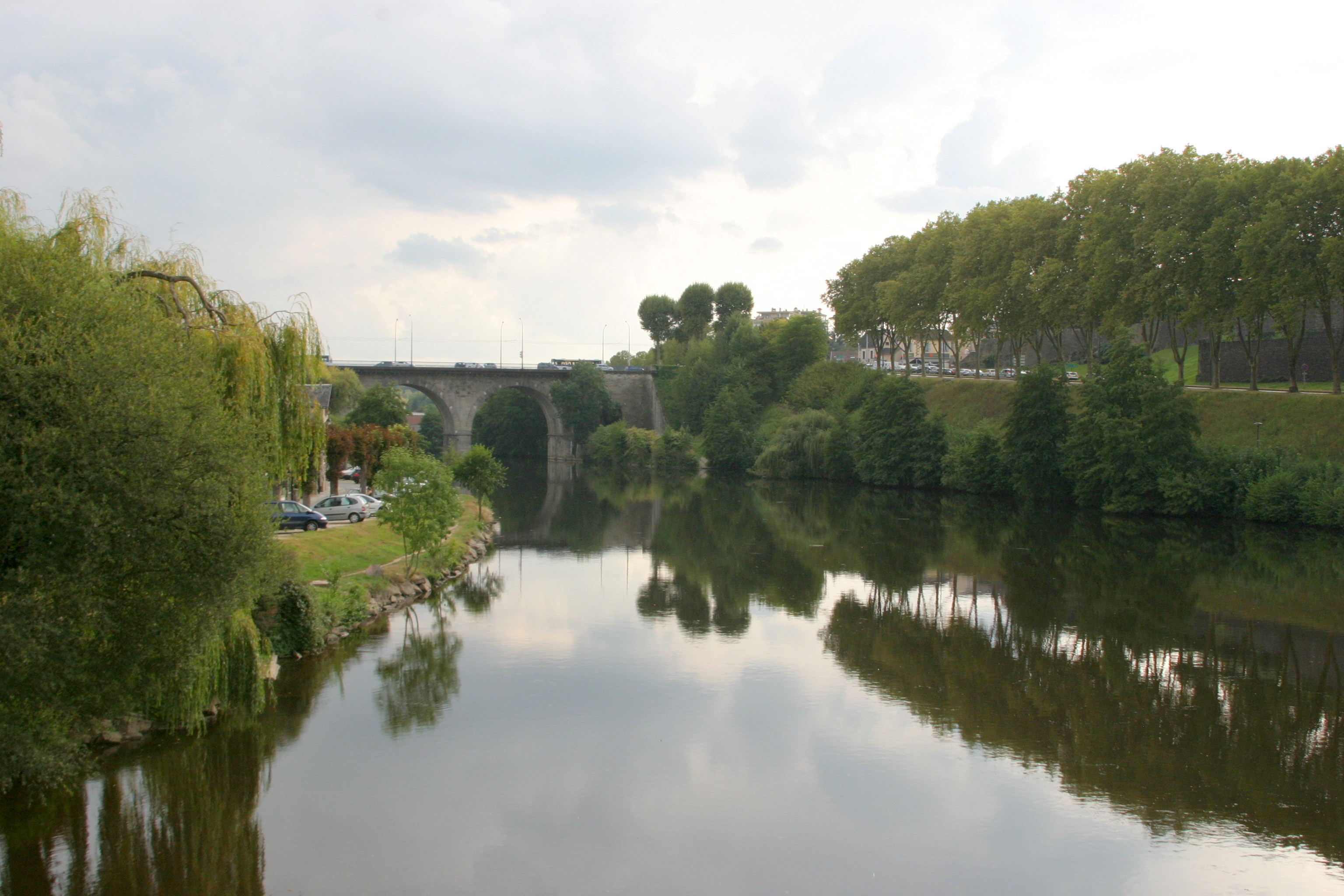
After the trauma of the train ride we decided that what we all needed was a quiet walk by the river. This turned out to be a good decision.

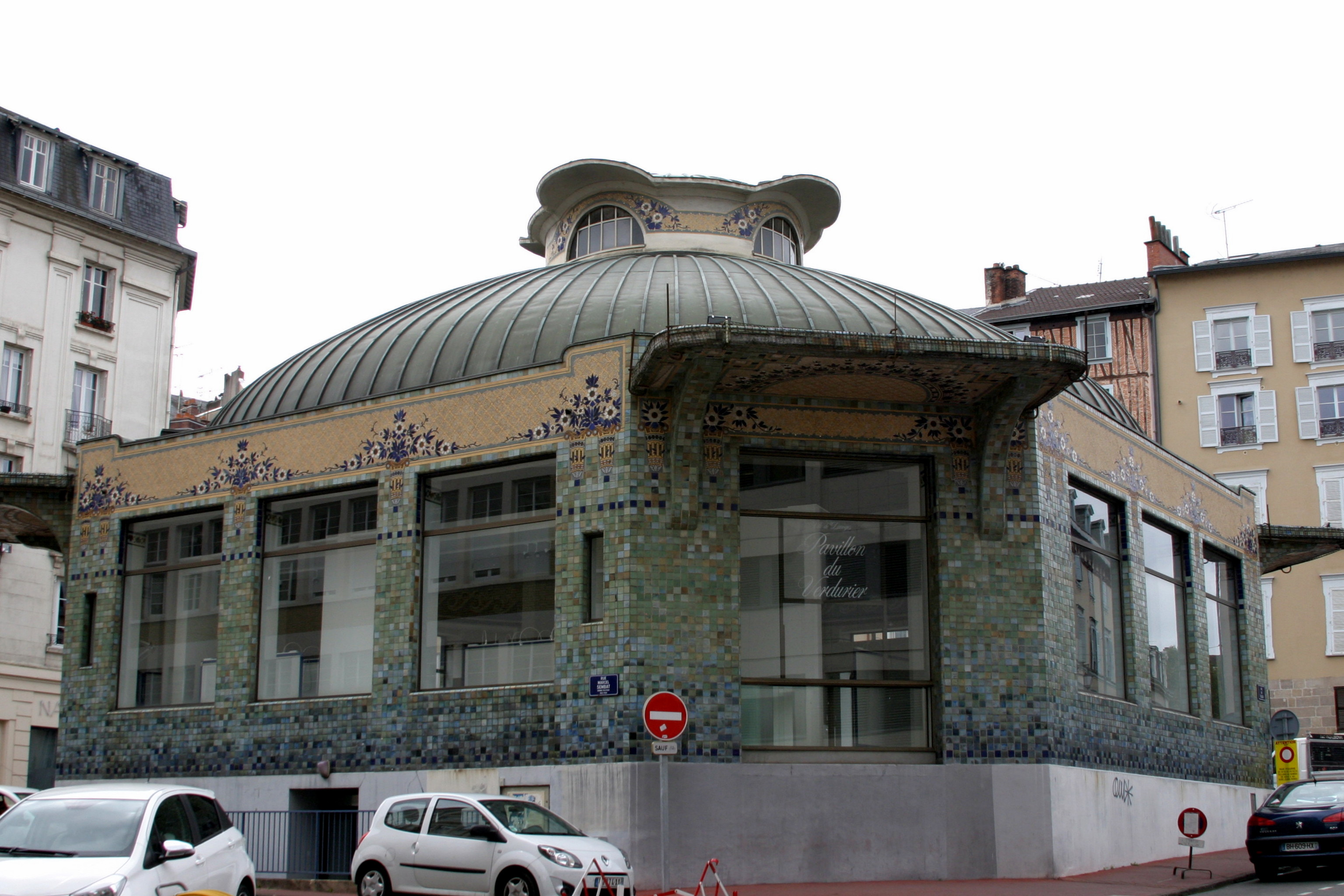
Limoges, France - Pavillion du Verdurier
Limoges, France – Pavillion du Verdurier

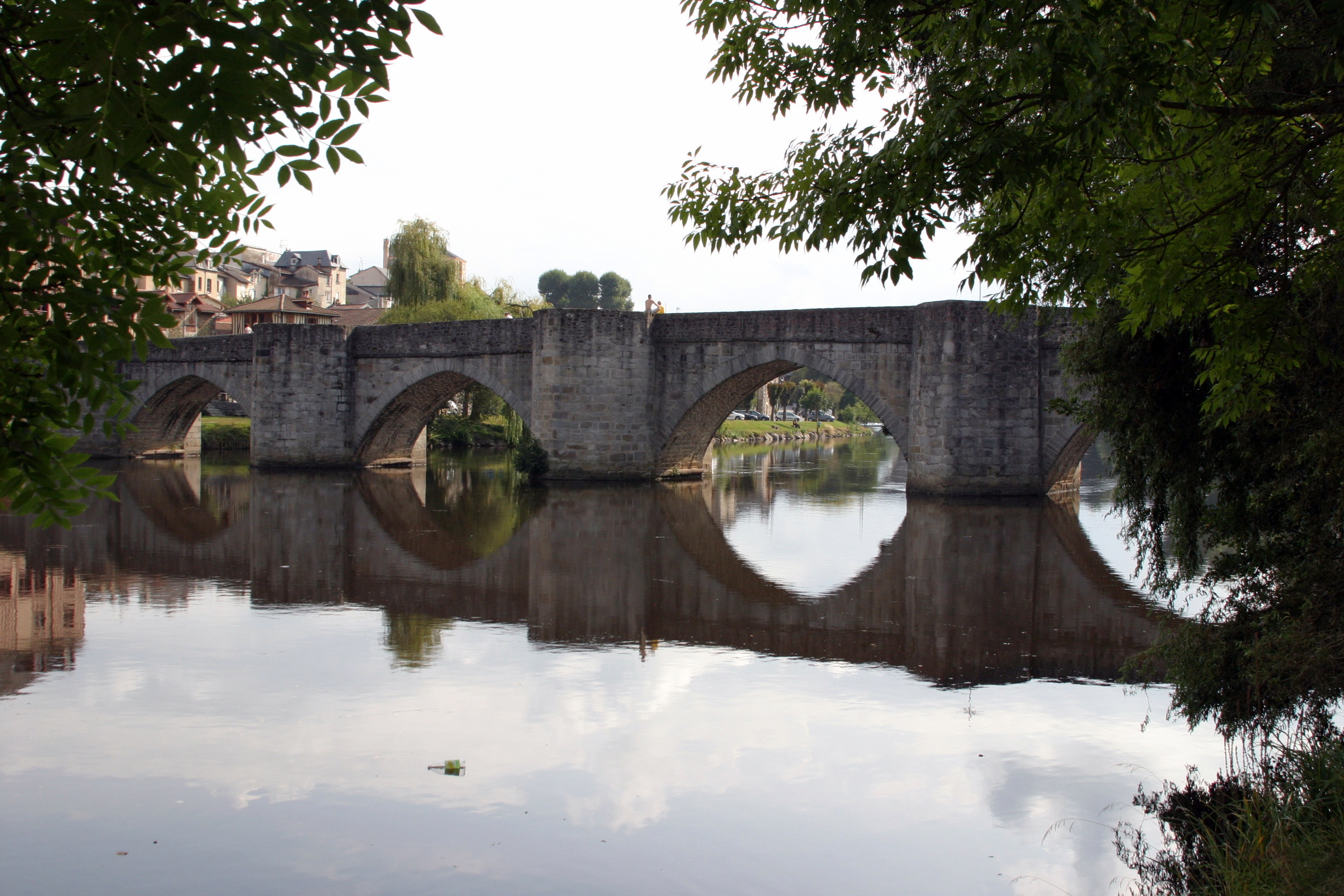
The walk by the river led us to the saint-Etienne Bridge ….

Limoges, France - Saint Martial Bridge -  dating from the Roman era
Limoges, France – Saint Etienne Bridge – dating from 13c.

The following description I have plagiarized from one of the many info plaques ….

The St Etienne bridge was built in the 13th C to divert some of the traffic away from St Martial bridge, aboy 1km downstream. It was on the “via Lemovicensis”, a main route to Santiago de Compostella and is  used by pilgrims to this day. It linked the right bank quarter of washerwomen, who until the middle of the 20th C washed the towns bourgeoisie’s linen in the river, to the “Clos Ste Marie”, nowadays a village in the city centre, on the left bank.

The bridge also marked the end of the stretch of river used to float lumber from the mountain to the construction sites and industries of Limoges.


It was very peaceful here, away from the noise of the city traffic. So much so that there was a bit of billing and cooing going on ….

Time for amour
Time for amour


Another, more modern, bridge …….


Limoges, France - Pont Neuf. Built 1838
Limoges, France – Pont Neuf. Built 1838
Limoges, France - Wonky buildings en route to the cathedral.
Limoges, France – Wonky buildings en route to the cathedral.


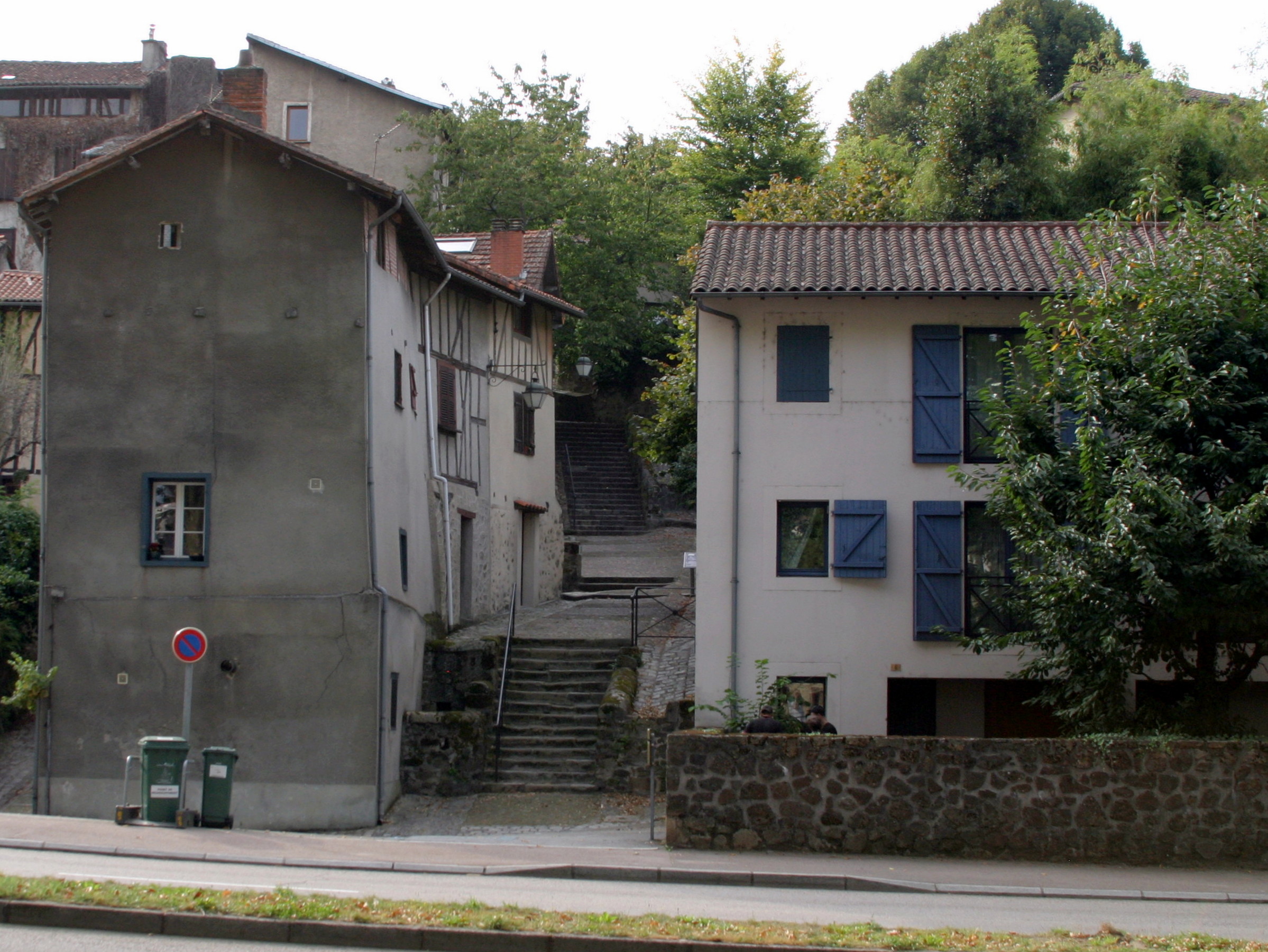
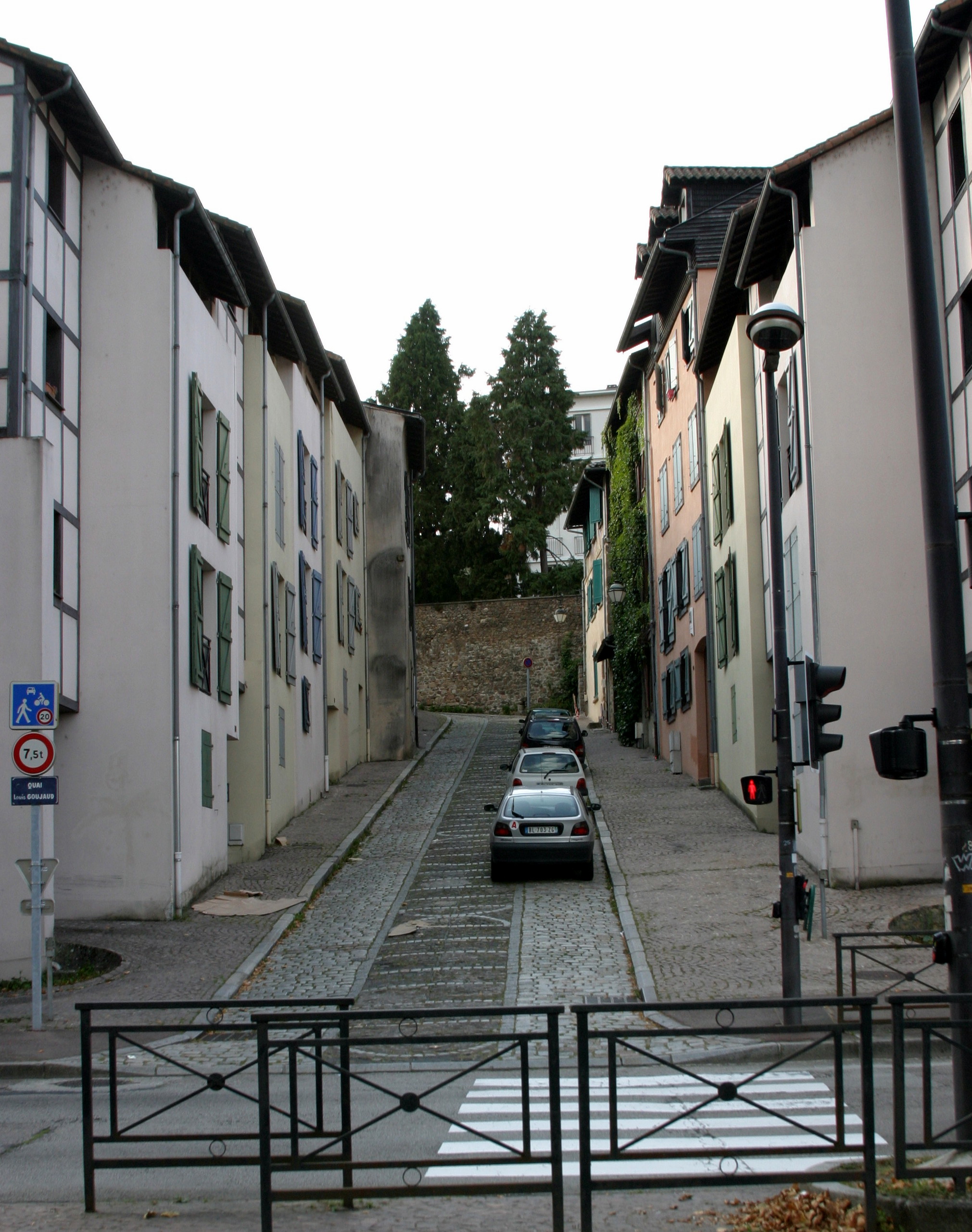
Limoges, France - Rue du Pont Saint-Etienne 1907
Limoges, France – Rue du Pont Saint-Etienne 1907
Limoges, France - Rue du Pont Saint-Etienne 2014
Limoges, France – Rue du Pont Saint-Etienne 2014

Limousin, France – Barrow


Garden Ornament ? - We used it as a bird table, placing out stale bread for both the birds and the red squirrels.
Gite, Limousin, France – Garden Ornament – We used it as a bird table, placing out stale bread for both the birds and the red squirrels.

Limousin, France – Day 3


Day 3, Sunday, was designated a slow, recuperation day. In reality this was our first full day in France that didn’t involve several hours behind the wheel. The crazy french lady had told us where to find the boulangerie, the boucherie and the local supermarket. She had also told us that there was to be a brocante, flea market, in the nearby town of Magnac-Bourg and that she herself would be there. So, after a leisurely breakfast we headed off to Magnac-Bourg in search of the brocante.

Roof lines - Magnac-Bourg, France
Roof lines – Magnac-Bourg, France

However, there was no sign, in fact Magnac-Bourg appeared to be closed apart, that is, for the Hotel des Voyageurs where we partook of a refreshing beer. We asked the hotelier, about the brocante. He, looking suitably mystified, disappeared inside and after consulting with his wife, reappeared to inform us us that there was indeed a brocante. But that it was at  Le Chalard, a mere 34k away.

Imposing building - Magnac-Bourg, France
18th Century Château – Magnac-Bourg, France

Beers downed, we took ourselves off on a tour of the local countryside which took us past many apple orchards, a lake and Coussac-Bonneval  which was duly noted for a future visit. We duly arrived at Le Chalard

Le Chalard, France - With the church in the background.
Le Chalard, France – With the church in the background.

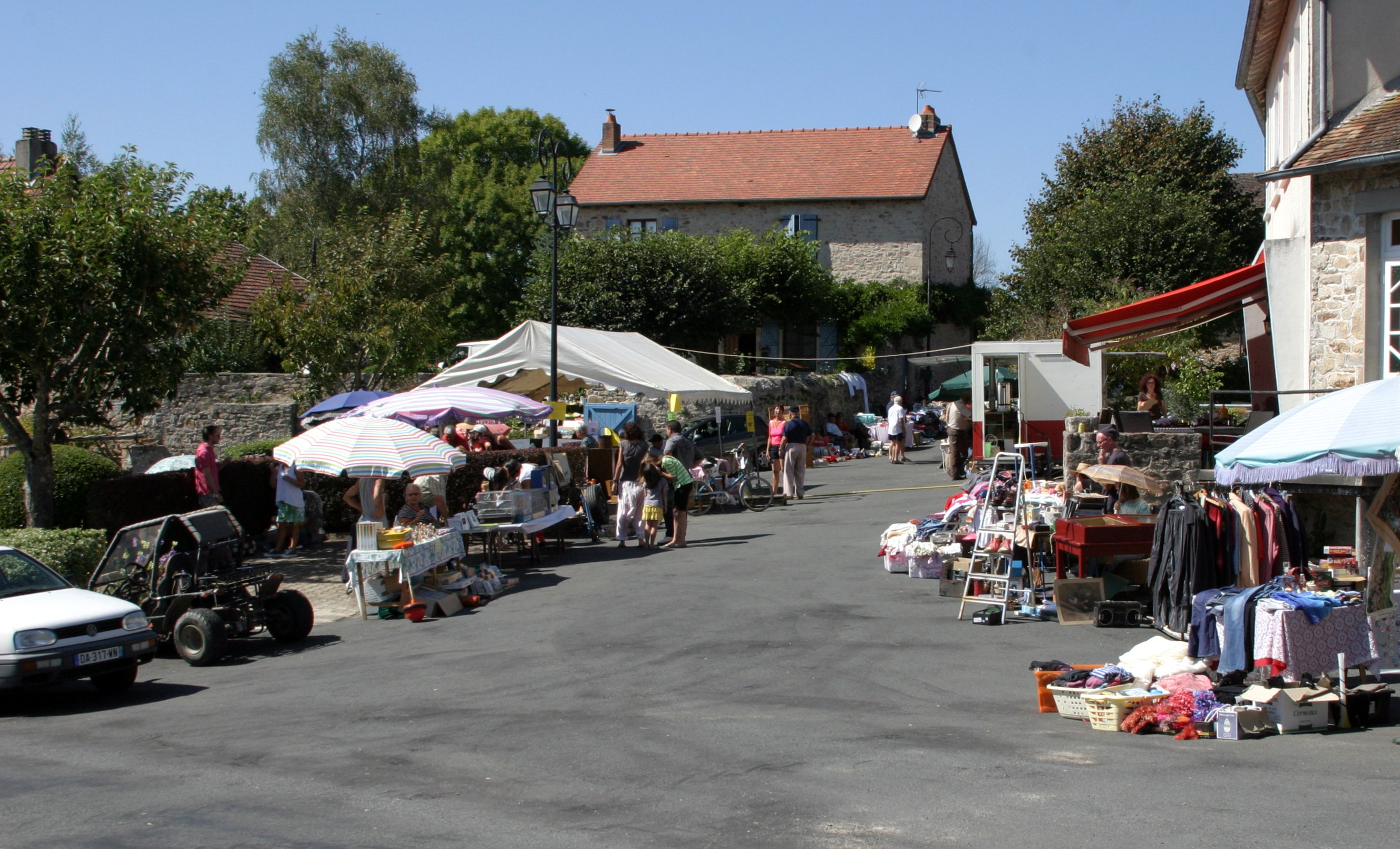
and had no trouble finding the brocante as it was spread all over the streets.

Brocante - Le Chalard, France
Brocante – Le Chalard, France

They do say that one mans trash is another mans treasure and I was amazed at the sort of stuff that was on sale. As a one time collector of vinyl I was quite interested in the numerous “vintage” records on sale as well as the various traditional wooden handled tools.

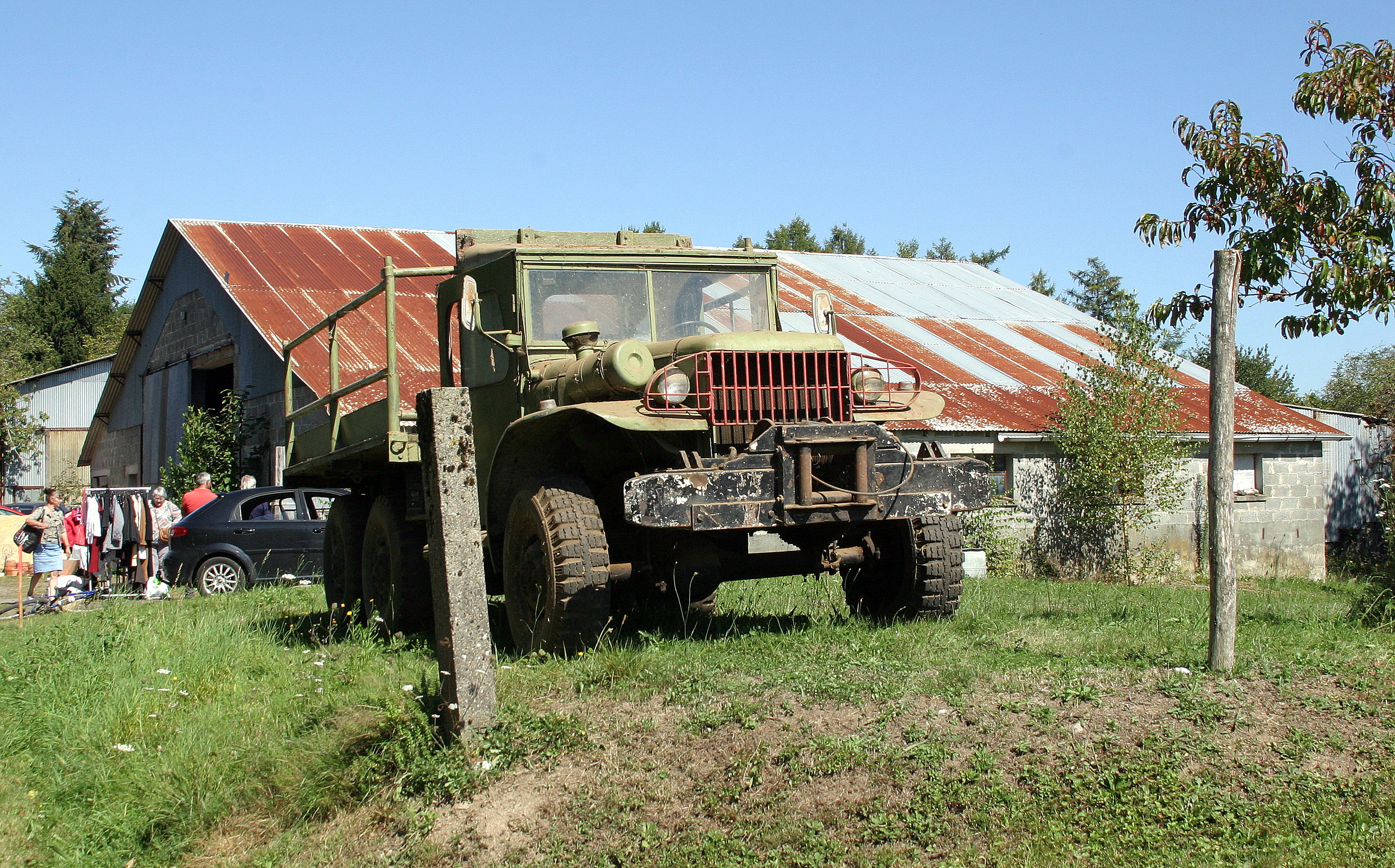
Le Chalard - Not sure if this was for sale in the brocante.
Le Chalard – Not sure if this was for sale in the brocante.

We ourselves had a couple of items in mind as we strolled the stalls. The gite was in need of a decent bread knife and also some decent size cups so that we could have a proper cup of tea. We picked up four coffee mugs at a euro each but there was no sign of a bread knife. At one stall, we were offered a wooden block of kitchen knives by a Brit who is now resident in the village. Unfortunately, despite a strong sales pitch, he failed to seal the deal.

This was due to the fact that the bread knife was missing !!!

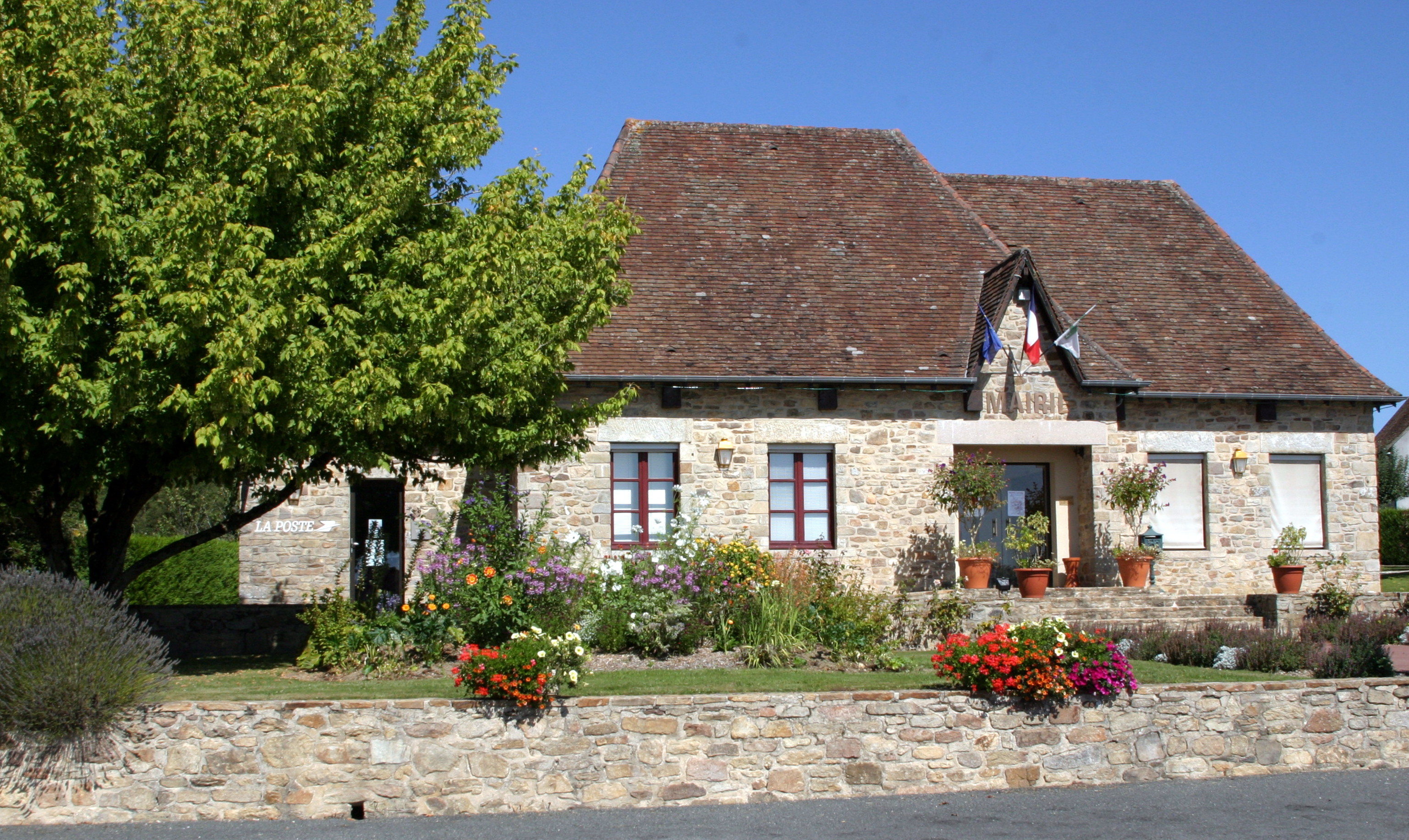
Mairie - Le Chalard, France
Mairie – Le Chalard, France


After an interesting hour or so spent rummaging we decided to head back to the gite where we broke out the beer and, eventually, the wine. The wine took a bit longer to break free as we couldn’t find a bottle opener. All four of us turned the kitchen upside down as we played hunt the bottle opener, searching in total disbelief that a french kitchen would not have one. Eventually we found two, hidden at the back of the cutlery drawer, and we were, at last, able to settle down and imbibe.

Sat outside, under the trees, watching the shadows grow across the fields as the sun set. The temperature in that evening sun was 30 degC.

Limousin, France – Day 1 & 2


Day 1

Consisted of an early start, 06:00, to drive up to the “chunnel” terminal at Folkestone. We made good time, with none of the anticipated delays on the M25. So much so that we were placed on an earlier crossing.
So, very soon we were underway, across the channel and plugging down the French autoroutes, heading for the B & B which was to be our bed for the night. Apart from a couple faux pas on my part, minor deviations, caused by my misinterpretation of the satnav instructions, the journey passed without incident. After approximately five hours motoring time punctuated by coffee, cake & pee breaks we arrived at Le Petit Nancay in Thenioux which is near Vierzon. Here we were given a warm welcome by Clement who greeted us with a big smile and showed us to our rooms.

Le Petit Nancay, Thenioux, France - Back view
Le Petit Nancay, Thenioux, France – Back view

This being our first evening in France, we asked Clement to recommend an eatery. He gave us several choices but pushed us to try a local establishment in the village.

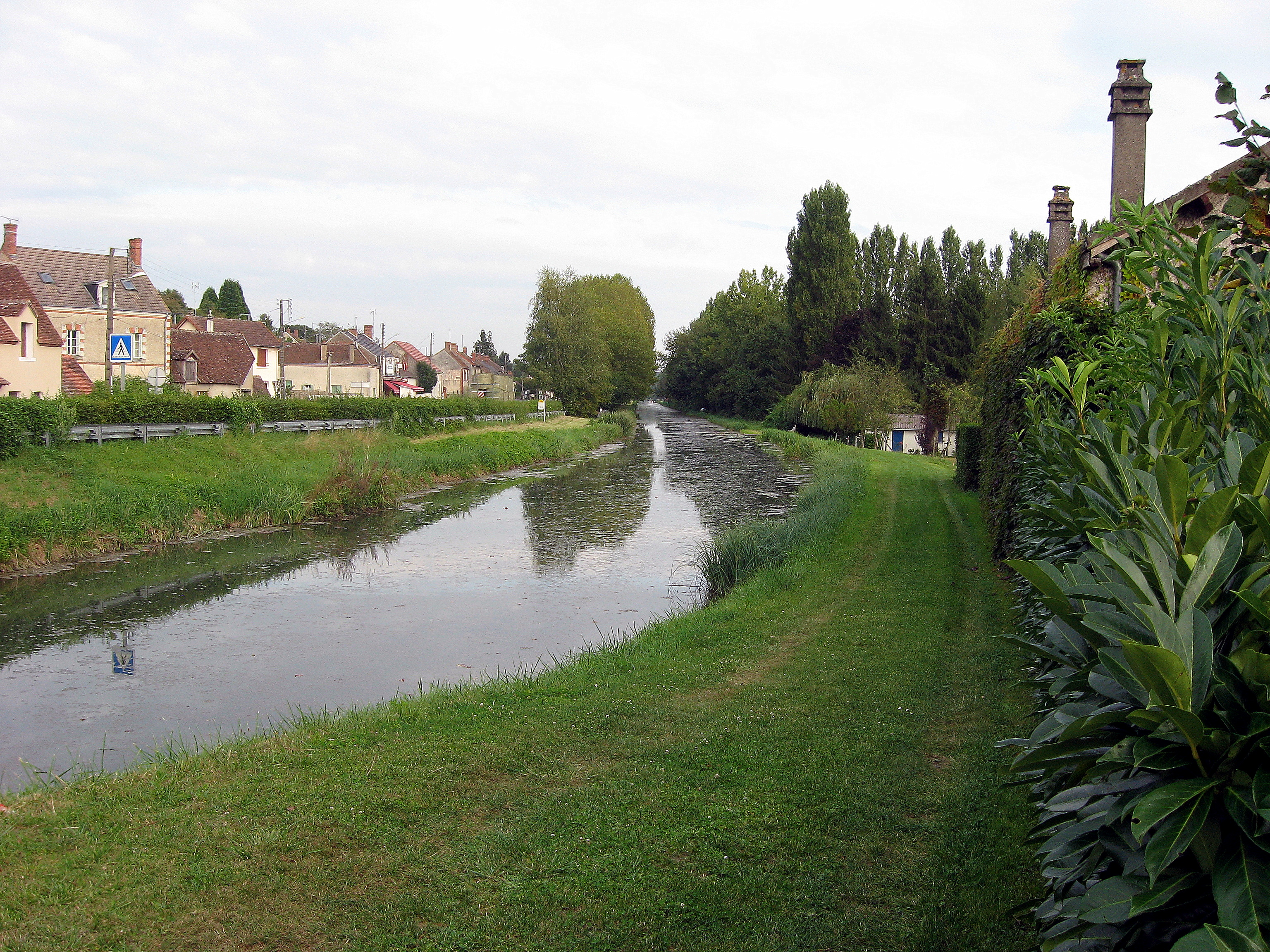
Canal de Berry, Thenioux, France

Taking his advice we strolled alongside the river to the local Auberge de la Coquelle.

From the outside this establishment is not very inviting. With it’s tired plastic patio furniture scattered under the trees and grouped under an equally tired pergola, of the type that looks like an old frame tent with the sides removed. All were deserted.

Dubiously, we stepped forward and studied the menu board. Not a large number of choices, but interesting ones. Starters included Goats Cheese Salad, Veal Kidneys with Black Pudding and Poached Egg with Foie Gras in a creamy sauce. Mains included Pave of Rump Steak, Duck Breast, Cod in a white wine and tomato sauce and Chicken (coqulet).

While we were studying the board we were approached by, as it transpired, the owner. He informed us that they didn’t open for another forty minutes. However, he offered us drinks so we sat and the drinks duly arrived. Our host also talked us through the menu and the local nuances then left us to talk amongst ourselves while we enjoyed the warm evening and listened to the birds in an adjacent stand of bamboo.

An unexpected bonus was the arrival of a hot bowl of mussels to share. They were presented in a white sauce and were delicious.

After an apparently short time, during which our wine, beer, and the mussels, had all miraculously disappeared, we were invited into the restaurant and duly seated.

As usual, no matter how many times a menu is read nobody is ever ready to order. However, with some guidance from the owners wife, we managed to order our meal.

Three of our group ordered the poached egg with foie gras while I had the kidneys which were very tender with a beautiful flavour.

For the mains we had all selected different dishes. Cod, Duck, Veal and Beef, all agreed our selections were beautifully cooked. All the dishes were accompanied by green beans and a gratin of potatoes. One of our group has an intolerance to cooked cheese so the chef created a separate, cheese free, version. Good service.

This was followed, for me, by a selection of local cheeses. Most of these were covered in a black mould which was not, visually, very appetising but they were, nonetheless, very tasty.

When it came time to settle the bill, the bottom line was so reasonable I actually enquired if they had included our pre-drinks and mussels. We were assured that all was in order and so we headed back to our B&B and on to bed. A fitting end to a long day.

Day 2

After a light breakfast, which included a kind of potatoe based pizza with ham and the usual selection of breads and croissants, we set out to continue our journey south.

We were making such good time it was decided to make a detour for lunch. And so it was that we found ourselves in the centre of La Souterraine. After a brief meander we settled in a fairly busy restaurant for a relaxed lunch.

On our return to the car we plumbed the address of the gite into the satnav which showed we were just one hour away from our destination. I then phoned Mrs. Santoni, the owner of the gites local agent. She suggested that we were four hours away. I argued that we would be just one hour and we agreed that we would call when we arrived in La Porcherie.

And so we set off and were almost immediately caught up in a diversion due to roadworks which then meant we were heading north. The opposite direction to which we needed to travel. Worse still we ended up stationary on the autoroute with no exit in sight. This less than delightful interlude added an hour to our journey and we began to think that Mrs. Santoni knew more than she was letting on. Eventually we were able to get clear of the traffic jam and made good time to the gite where we called Mrs. Santoni and advised her of our arrival. She duly arrived and soon earned herself the title of “The Crazy French Lady”. With much bowing and hand shaking we were led into the gite and shown around. She seemed to obtain much humour from introducing the toilet as the “water closet”. Further delight was derived from pointing out, belatedly, that we, or rather I, should watch out for the low beams and door lintels throughout the building.

Chortling away to herself she wrote out the locations of the nearest supermarkets, boulangeries and boucherie. Also she advised us of a brocante at which she herself would be running a stall.

And then she was gone, we being left to move in and get a brew on.

Why do the french not have kettles ? Water boiled in a saucepan does not taste the same. At least this gite had a teapot, but only big enough for two. Our last gite had neither kettle or teapot.

After a cup of tea we decided this being Saturday, we had better obtain supplies. So we headed into Magnac-bourg where we had been assured we would find an Intermarche.

We did.

It was shut.

Thank god for modern day satnavs. We were soon heading back up the autoroute towards Limoges where we found a Carrefors. Suitably stocked up with provisions, beer, wine and, oh yes, some food, we were back on the road to La Porcherie. To rest after two pretty full on days.