Bobs Bowel 12 – Home Again


After ten days in hospital, I was home, at last. And what a difference it makes.

To start with, home is much quieter. As I said in one of my previous posts, I didn’t realise just how noisy hospitals are, I think the staff become quite blasé  about their speech levels, they also don’t seem to worry about banging cupboard doors and trays around. And then there are the various bleeping machines measuring life signs, pumping fluids and inflating air beds.

On the subject of machines pumping fluids i.e. saline drips etc.  The nursing staff seem to be immune to the sounds of the various alarms emitted by those machines. For example, I was hooked up to a saline drip and my pump started beeping. Nobody came but, luckily, I was able to see the small display screen which was indicating air bubbles in the line. I’ve seen enough crime dramas to know that air injected into your veins doesn’t end well. So I had to press my help button and a nurse duly arrived to redo the connections.

Anyway, being home means I don’t have to contend with the noise anymore. Another positive for being home is being in your own bed. My first night home I got seven hours sleep. Amazing, considering I don’t think I had a decent night’s sleep all the time I was in the hospital.

Sad to say I wasn’t able to match that in the days that followed, typically only getting three to four hours each night according to my smart watch. Having consulted “Dr Google” it seems that lack of sleep is not unusual after significant surgery. Thankfully, my sleep patterns have, slowly, returned to normal.

Another big difference between hospital and home is the attitude of the staff versus friends and family. In hospital the staff, whilst caring for you, encourage you to get up and about. The want you to walk the corridors, go and have a shower, and so forth. Movement helps with the healing process and also helps get the digestive processes going. Apparently it also helps dissipate the gasses in the abdomen. These are the gasses used to inflate the abdomen during the laparscopic surgery. Once home I found that, family in particular, were very protective of me. Every time I moved, someone was asking am I all right, do I need something, when all I am doing is adjusting my seating position as my bum has gone numb.

I did find that, as predicted, I was quite tired and dozed during the day. But that wore off over a few days and I was soon able to help with meal preparation, despite my wife intercepting me at every opportunity.

Of course I had to be careful about what I attempted to lift, push or pull. The standard “boiling a kettle” to make a cup of tea for two was a definite no-no. However, I am beginning to question the advice I was given. I think the advice about lifting and bending etc. is somewhat generic and based on old surgical practices. That is to say, based on abdominal surgery, which involves being cut from stem to stern with massive intrusion to the  muscles. My surgery was robotic laparascopic, so I only had a few holes where the rods were inserted, so minimal intrusion to the abdominal muscles. Yes, there is a letter box cut below my belly button, where they extracted the tumour and colon after it was cut away. However, I felt no muscular tensions down there. Rather, all muscular sensation tended to be in the upper abdominal area.

The point I am  making is that I did not feel any kinds of pain, soreness, or any other sensations around the wound site’s while I was moving around. Obviously, I didn’t want to do anything extreme but was I being too cautious!

I was also told that I shouldn’t drive  for six weeks. Or, at least, until I was able to perform an emergency stop without any pain. Also I had to be able to make rapid turns of the steering wheel. What wasn’t clear was who decides that I am fit, and how do “they” decide?

With driving, there is always the question of insurance. I had read that you are supposed to inform your insurance company that you have had major abdominal surgery. However, my insurance company does not have that requirement, but recommend getting your doctor to write a letter stating that you are fit to drive.

Getting to see a doctor might be a bit of a challenge here in the UK at the moment. I am told I will have a meeting in surgical outpatients in five  to six weeks.  That would tally quite nicely, if it happens.

I did phone the colorectal team and was informed that the decision, of when to drive, was down to me. I was also advised to practice braking in my car whilst stationary on the drive. If I experienced any pain, that would be a good indicator that it was too soon.

Another positive aspect to being home was having proper meals, with more solid foods on the menu. During my time in hospital I transitioned from clear fluids, free fluids, nil by mouth, clear fluids, free fluids and finally on to low fibre meals. On discharge I was expecting to be given some dietary advice, but that didn’t happen. So left to my own devices I have pretty much reverted to my previous foods. I have had jacket potatoes and ate the crispy skins, had roast chicken pieces and ate the skins. Also my daughter cooked us a chicken curry, medium heat. Oh what a joy as these were all things I had to avoid, from the day my tumour was diagnosed, up to the day of the surgery.

A few days after discharge I received a call from the colorectal team. The purpose of which was to inform me of the histology findings.

Firstly, the tumour removed was confirmed to be a carcinoma “something or other”. She did say, but I promptly forgot the name. Anyway, they took the tumour with good margins which were found to be clear of cancerous cells. So good news.

Secondly, they took out sixty five lymph nodes, of which two were found to have cancerous cells. Again, good news, but followed up with a precautionary offer of a consult with an oncologist.  Heavy emphasis on the “precautionary” statement.

So it is likely I will have some chemo. What form that will take I have yet to discover.

In the future, after five to six weeks I should have a Surgical Outpatients appointment.  Six months down the road I should have a virtual (telephone) consult to see how I am fairing. At the twelve month point I will probably be invited in for a colonoscopy. It is also anticipated that I will have an annual CT scan for the next five years.

So watch this space, for future developments.
Bobs Bowel 7 – Outpatients Anaesthetics


Thursday 13th February, and another appointment. Once again, at the Queen Alexandra Hospital. I’ll soon have my own allocated parking space if my visits carry on at this rate.

This time my appointment is with an anaesthetist in the Outpatients department.

My appointment was at 10:00, and right on the button, I was whisked away for some observations. I had my blood pressure, weight, and height measured, again. I was also given an ECG.  And then it was back to the waiting room where I had time to make friends, playing peek-a-boo with a toddler.

After a short while my name was called by the anaesthetist wearing an amazing pair of electric blue shoes.

After the usual pleasantries she revealed that we had met before. Ten years ago, when I went in for the brachytherapy treatment for my prostate. She was the anaesthetist who drew the short straw for my procedure. As a patient I was not very cooperative, not on purpose. With me sat on the table in theatre she attempted to give me an epidural. Three times!! My body just refused to play ball, would not give up my spinal fluid so no further attempts were made.

Once the procedure was underway it was time for me to misbehave again. I unconciously decided to vomit. She unfortunately had to deal with that, and call in Dynarod to suck out my tubes.

I apologised to her as in my head I was to blame, having had rather a lot of cheese as my last meal the night  before the procedure. Nobody told me that they tilted you head down to insert the nuclear seeds. She showed me the copious notes taken following that little episode but she was quite magnanimous. Noting my, as yet undiagnosed, type 2 diabetes which apparently can have the effect of slowing down your stomach process, causing “pooling” which in turn can cause regurgitation.

After reminiscing about old times we got down to the business in hand. We had the inevitable chat about my health in general and specifically focussing on weight, fitness and diet.

I was given a thorough but gentle arse kicking. Likening preparing for the operation to an athlete preparing for the olympics. Apparently the procedure will last about four hours and, although I will be unconcious laid out on the table, for my body it will be akin to running against Usain Bolt. So, as she put it, I need to be in the best possible shape to deal with the procedure but also the fitter I am the faster I will recover.

Exercise and weight loss are the order of the day, supplemented by plenty of practice with my spirometer. She wants me to up my daily walking. That shouldn’t be hard since it is negligible at the moment.

We also talked about diet with regard to my diabetes which can have a negative impact on my post op recovery. And right there is where I get into trouble.

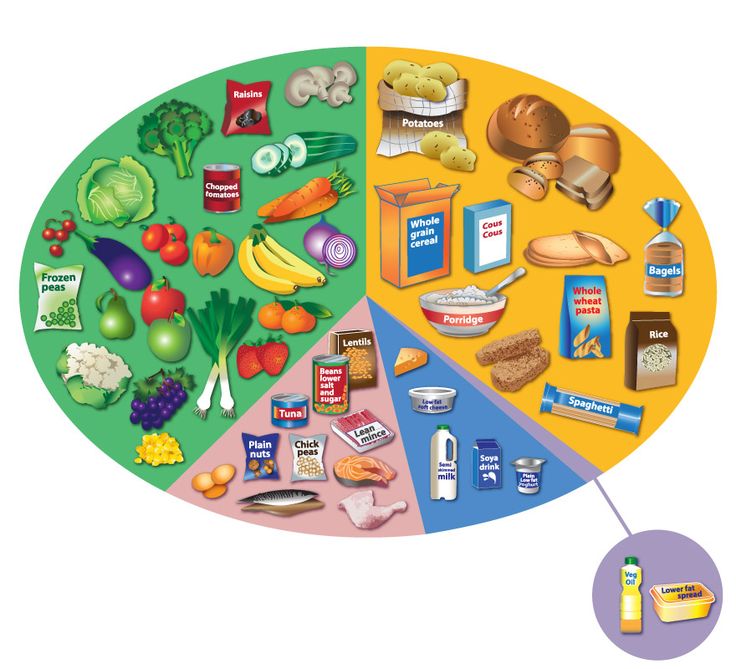
In general the medics extol the benefits of a balanced diet, with plenty of fruit, vegetables, nuts, seeds and so forth. Quite often promoted as the mediterranean diet. Below is a typical chart promoting a balance diet. All stuff that I like.

Due to the location of my tumour which is partially blocking my bowel I have been advised to stay on a low residue diet which conflicts with the idea of a balanced diet. Which in turn also conflicts with a diabetic friendly diet.

What that means is that the only food that I can eat from the green zone is carrots which have been peeled and cooked until they are soft. I can have cucumber but I have to peel it and scoop out the seeds. From the yellow zone I cannot eat any of the wholegrain items. I can have potatoes cooked without their skins and not shown I can have white bread, rice and pasta.

Hang on a bit, actually, for my diabetes I should not be eating any quantity of carbohydrates as this gets turned into sugar, bad for diabetics. So between the diabetes and my tumour everything in the yellow zone is pretty much a no-no.

Things do get a little better when we look at that strange pink zone. I can eat the tinned tuna, chicken, fish, eggs, and mince. Although my tumour says no to fish skin and bones like you might get with sardines and pilchards. Meat is fine but no gristly bits, no bacon rind etc.

And on to the blue zone where I am allowed small amounts of cheese and milk.

And so, I am resigned to eating a mainly protein diet, not quite leaping into the full carnivor diet. Supplemented by squidgy overcooked root vegetables.

As if meal preparation wasn’t already difficult enough.

Ah well, as the anaesthetist says, it is only for a few weeks.

Sad to say, I still don’t have a date for my op.

Bobs Bowel 6 – Iron Intravenous Infusion


Monday 10th February and, as I stated in my last post, although I don’t have a date for the surgery the NHS is hell bent on keeping me busy.

Following my colonoscopy I was informed that I was borderline anaemic and that I would need an Iron Infusion before my surgery.

Today is the day and my appointment was scheduled for 10:00. However, my iron prescription has not arrived.

So, sitting waiting. It is 10:30 !

It’s now 11:10, and after much searching, the nurses, three of them, have managed to cannulate me. Apparently, my veins were playing hide and seek. Not helped by my not having had a drink before arriving in hospital.

I did make a cup of tea, but traffic news indicated problems, so we left early. My tea is still sitting on the kitchen counter.

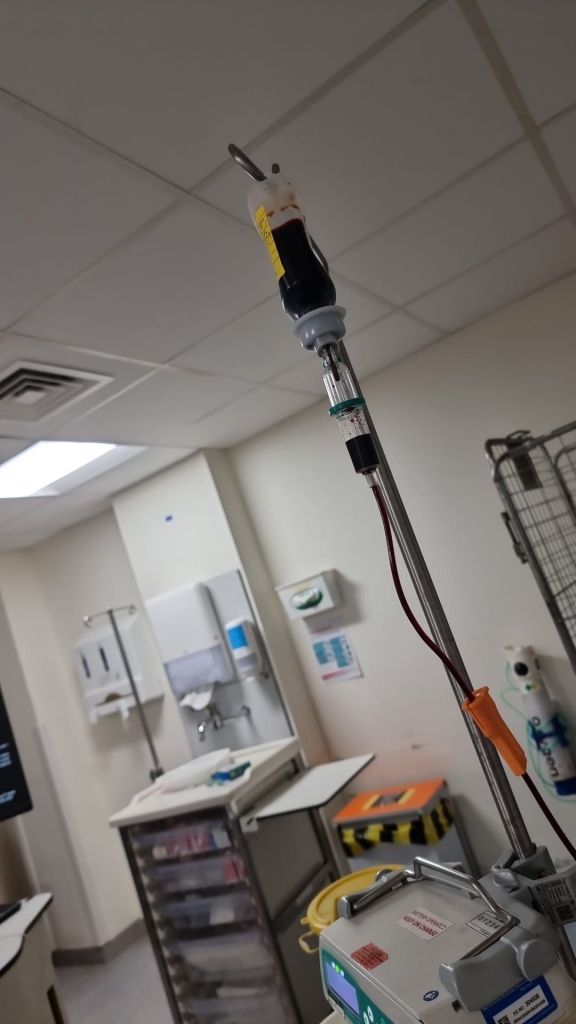
I am now hooked up to the iron  juice,

and literally, it has just entered my arm.

The infusion should take about an hour.

Job done in just under an hour. I’ve been unplugged, given a cup of coffee and an egg mayo butty. Thirty minutes to check there are no ill effects.

Thirty minutes was up. Took my blood pressure, blood gas, and temperature. All good. The canula was removed, and I was discharged.

It’s now 13:30 and I’m sitting in the hospital cafeteria having a proper coffee. I’m killing some time before heading up to visit a friend of mine who has been a patient here for the last few days.

As for me, I have go and get a blood test in two weeks to see if the iron juice has done its job.

More later ….

Bobs Bowel 5 – Surgery School


Monday 3rd February and the preparations for my impending surgery continue apace. The latest adventure was a two hour class at Surgery School.

I know the NHS is constantly strapped for cash but putting me through a crash course in surgery doesn’t exactly fill me with confidence that my outcome will be positive.

Of course the aim is not for me to carry out DIY surgery. No this session was all about preparing me for surgery and getting me as fit as possible both for the procedure and the recovery period after.

Getting fitter, they say, will help reduce the risks associated with the surgery. Risks such as chest infection, blood clots, kidney problems, wound infection / healing.

To this end the speakers were focusing on exercise and nutrition, the importance of a balanced diet. Unfortunately, my cancer is such that it is partially blocking my bowel. Because of this I am continuing on a low residue diet which means I cannot eat many of the “healthy” foods. No wholegrain breads, no high fibre vegetables such as onions, leeks, cabbages, and cauliflower. Also many of my favourite salad vegetables such as tomatoes, peppers, radishes, celery and baby corn are excluded. In addition to the low residue diet I am also on a course of laxative, Molaxole. To help keep things moving.

Thankfully I am not a smoker as that is definitely a no-no. Apparently smoking can have detrimental effects on ones ability to heal and also the well publicised impact on the respiratory system.

Similarly, drinking alcohol is frowned upon. My consumption in general has reduced dramatically over the last few years, to the point where I might only have a pint of beer or a glass of wine every week or two. Total abstinence won’t be an issue for me.

Preferably they like patients to totally abstain from drinking and smoking on the run up to surgery and offer help to those who need it.

And finally, that brings me to the contraption in the photo below. No it isn’t some kind of sex toy. This beast is an Incentive Spirometer.

Incentive Spirometer

All folks attending surgery school were given one of these. The purpose is to reduce the risk of lung complications following surgery.

Use of the incentive spirometer is part of the iCOUGH process a program implemented by hospitals nationally and internationally. The acronym ICOUGH stands for: Incentive Spirometry, Coughing and deep breathing, Oral care, Understanding, Getting out of bed at least three times daily, and Head-of-bed elevation. The program emphasizes deep breathing exercises to keep lungs healthy and prevent lung problems. Oral care, patient and family education, getting out of bed, and head-of-bed elevation are also important components of the program.

We were instructed to use this device three time per day prior to surgery, and every hour following surgery.

I still don’t have a date for the actual surgery but the medics are focussed on getting me fit and also preventing me from getting bored.

Bobs Bowel 4 – NHS Healthcare


After years of paying National Insurance there is no doubt I am getting my moneys worth from the NHS. After playing the poo sticks game I have had a Colonoscopy, CT Colonography, a session with a colo-rectal consultant and have been booked in to Surgery School.

My home phone seems like it is a hot line to the QA (Queen Alexandra Hospital).

Following the consult I received a text message informing me that a call had been booked by the Care Coordinator !!! No explanation of why. Obviously I could make a pretty goood guess. But I still had to confirm back to them that a call before midday on the 31st was acceptible. I also took the opportunity to ask what the call was about. The response was almost instantaneous. Lisa, the Care Coordinator from my GP Surgery, having seen various letters between the hospital and my GP, was making a courtesy call to see how I was doing with the ongoing investigations.

So Friday 31st arrived and it turns out that Lisa had very little information. I have since seen the letters that my GP was sent. Not very enlightening. So I brought Lisa up to speed, giving my history so far, up to and including my consult on Tuesday.

She in turn told me about the services that were available to me leading up to the surgery and what support they can provide after I return home. This includes councelling, assistance with obtaining benefits etc. After a very pleasant chat we agreed that she would call me on 28th February to see how I was going. Hopefully I will be home recuperating after the operation.

As I said my phone has been very busy. On Friday morning I missed a call from Julie, one of the colo-rectal nurses. She left a message inviting me to call her back. I returned her call and retaliated by leaving her a message in her voicemail. After one round of answer phone tennis she called me.

She asked if I had heard from the anaesthetist, which I had not. She told me that they had spotted that I was borderline anaemic and that I needed to be scheduled in for an iron infusion/transfusion!

Two weeks ago, the doctor that did my colonoscopy had told me about this. I had forgotten but I am glad that the anaesthetist is on the ball. Julie told me that I should probably expect to be contacted early next week, and that if I didn’t hear from them by Wednesday, to call her.

Later that day I received one of those neutral NHS appointment invitations. Informing me that an appointment has been made for 10:00 on Thursday 13th of February. What is this for? Is it for my iron infusion, or just a face to face with the anaesthetist? There is no information about what if anything I need to take with me. Nurse Julie told me I should arrange a lift for when I have the infusion just in case I’m not fit to drive after. There is nothing in this invite to clarify so I will have to call them on Monday.

One thing I will say for the NHS, once you are in the system they do look after you. So far, I have nothing but praise for the staff that I have been involved with. With the one exception, the CT Colonography, they have ensured that my experience thus far has been reasonably pleasant.

Bobs Bowel 3 – The Consultant & More


Tuesday 28th January, and my first meeting with the consultant. It was quite intense and a bit of a good news, bad news scenario.

First up the bad news, the results of the biopsies taken during the colonoscopy  confirm that the tumour is cancerous. I guess I was expecting that and was already resigned to the fact that surgery was required. Confirming the cancer was just detail.

On to the good news. The results of the CTC show that the cancer seems to be contained within the colon and hasn’t spread elsewhere. Apparently, there are a couple of polyps but nothing to be concerned about at this time. Some time after the surgery, I will likely have a colonoscopy, and the polyps will be dealt with then.

I was told that I should get a surgery date within the next three weeks. The surgery itself will be of the keyhole variety. The consultant ran through some of the issues / risks. Obviously, all surgery comes with risks. It is invasive, and the body wasn’t designed for easy access. In my case, proximity to the spleen was of concern.

Given that my tumour is causing a partial blockage, surgery is the only option. It is what it is.

Prior to that, it seems they have a lot of fun activities planned for me, so I will be visiting the Queen Alexandra Hospital …. a lot.

I have already been booked into surgery school.  This two hour classroom session is on Monday, 3rd January, to be held at the Oasis Centre. The purpose of the class is to prepare the patient, me, for the surgery and after. To tell about the process, the time on the high dependency ward, and preparation for going home and what to expect in the time following the procedure.

Another treat will be a session with the stoma nurse. Although it isn’t planned, the surgeons won’t know until they go in and may decide that a stoma is necessary. This may be temporary to allow my bowel to heal or, worst case scenario, permanent if they can’t repair the bowel. Apparently, all bowel surgery patients are taken through this possibility and the ramifications.

Finally, there will be a consultation with the anaesthetist. If they can glean enough information from my notes, then it should be just a telephone consult. Otherwise, a further trip to the QA will be required.

Once I have had the operation, I can expect to be in the hospital for about a week or so. Escape will be dependent on my how fast my bowel starts to function. I was told that some patients have gone home after three days, but typically, it is a five day stay.

The things I’m prepared to do to get out of cooking and housework.

And then it’s on to recovery, i.e. back to normality. Again, everyone’s different, but they were talking three to six months.

I’m coming to realise that this is a big operation. Nobody has actually vocalised this fact, but I’m picking up on the odd words that were dropped by the consultant and one of the colo-rectal nurses.

I have no idea if there will be any after treatment, i.e., chemo or radio therapy. This was not mentioned, and I forgot to ask, but perhaps that is a discussion for after the operation, when they know what they are dealing with.

In the meantime, I have been having a lot of discussions with Gerry about preparing for my time in the hospital and immediately after. These are non medical in nature.

Gerrys mobility is OK around the house, but she can’t stand for long. So preparing meals for herself could be problematic. There are a number of companies that make and deliver ready meals so we are considering getting some to put in the freezer. Gerry should be able to manage those.

Of course, after I return home, my capabilities are a bit of an unknown quantity at this time. There are likely to be restrictions on lifting and carrying. Simple things like lifting a kettle to make a cuppa may not be allowed.

I won’t be allowed to drive for a while, and although Gerry still has her licence, she hasn’t driven for a couple of years. So we are going to have to rely on family to provide taxi services for any appointments etc..

Sadly, this bloody tumour is causing a lot of disruption, impacting others’ lives too.

At the back end of February we have tickets for two concerts. The first is for Uriah Heep, a band that I started following in the 70’s. This concert is part of a 50th Anniversary and farewell tour. Missing that will be a bit of a blow.

The other concert is for Brit Floyd, a Pink Floyd tribute band. We got tickets to this show as a Christmas present for Summer,  our great-granddaughter. She is always saying how she likes Pink Floyd, so we thought a tribute band was the nearest she would get to the real thing.

We are already trying to arrange for others to take the tickets

Two further events are possibly in jeopardy.  The Goodwood Members Meeting in April, which usually entails a whole day on my feet. And then there is an Andre Rieu concert at Wembley in May. We will just have to see how my recovery goes.

That’s it for now.